Skip to content
Send enquiryEnquiry

Bunker inspection by drone: find concrete damage without scaffolding in the bunker

Internal inspection of waste bunkers, coal bunkers and bulk material bunkers with the Flyability ELIOS 3. The drone flies the bunker walls from the fill level up to the underside of the crane runway. You receive photos, videos and a 3D point cloud showing every defect in its place – without scaffolding, without an aerial work platform, without anyone climbing into the bunker.

  • No scaffolding, nobody climbs into the bunker
  • No emptying: crane pause by arrangement
  • Findings located in the 3D point cloud

A selection of Kopterflug clients and partners – operators in steel, chemicals, energy and logistics

  • Logo BASF
  • Logo Covestro
  • Logo Shell
  • Logo ArcelorMittal
  • Logo Gassco
  • Logo Mercedes-Benz
  • Logo swb
  • Logo Linde
  • Logo Uniper
  • Logo Fortum
  • Logo PreussenElektra
  • Logo Engie
  • Logo Mainova
  • Logo Evonik
  • Logo INEOS
  • Logo SABIC
  • Logo thyssenkrupp
  • Logo Aurubis
  • Logo Trimet
  • Logo KSB
  • Logo Henkel
  • Logo Beiersdorf
  • Logo Boehringer Ingelheim
  • Logo Volkswagen
  • Logo Konecranes
  • Logo Fraport
  • Logo WISAG
  • Logo Boskalis
  • Logo Dow
  • Logo HKM
  • Logo Komatsu
  • Logo Veolia
  • Logo Lapp
  • Logo Bahlsen
  • Logo Deutsche Bahn
  • Logo DP World
  • Logo DSV
  • Logo Haribo
  • Logo HeidelbergCement
  • Logo Huntsman
  • Logo ICL
  • Logo IKEA
  • Logo Minimax
  • Logo MTU
  • Logo Procter & Gamble
  • Logo Raffinerie Heide
  • Logo Remondis
  • Logo RheinEnergie
  • Logo Röchling
  • Logo Rossmann
  • Logo Sappi
  • Logo Siemens
  • Logo SMA Solar
  • Logo Smurfit Kappa
  • Logo Steuler-KCH
  • Logo Südzucker
  • Logo TenneT
  • Logo Thyssengas
  • Logo Salzgitter
  • Logo ZCR

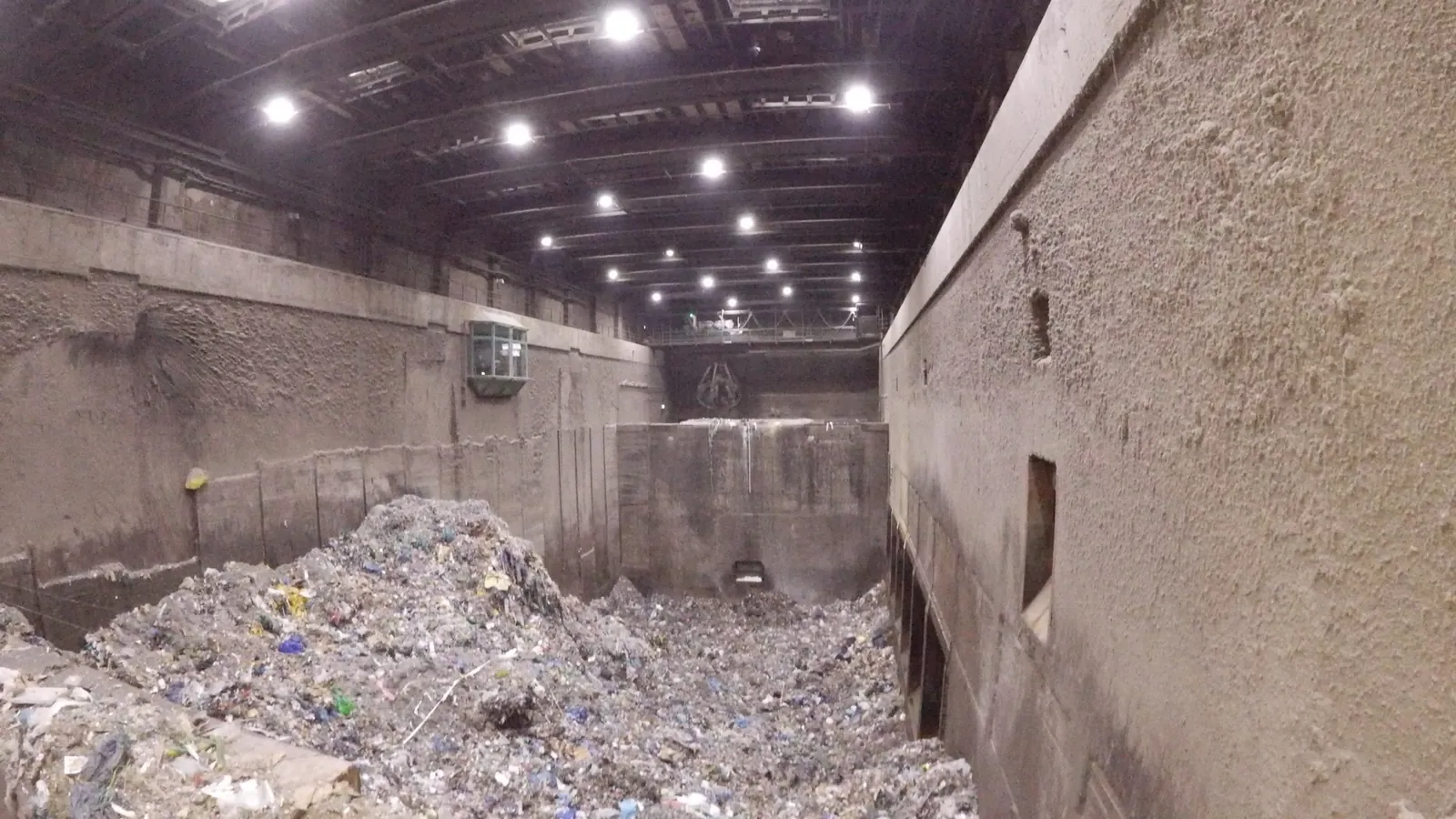
Grabs, waste and moisture wear down the bunker walls while the plant is running. Anyone who wants to see the walls at close range traditionally needs scaffolding or an aerial work platform – in a bunker that would have to be largely empty for this. With the Flyability ELIOS 3 it works differently: the drone takes off from a spot we agree with you and flies the walls section by section, with its own lighting even in dark areas. As a rule, the bunker stays in operation; the crane pauses in the section being flown, or an area is closed off. How this is done we agree with your operations team.

Nobody has to enter the bunker

No climbing in over waste or bulk material, no work at height: the drone flies, your staff stay at the edge of the bunker.
All walls instead of spot checks

Walls, pillars and openings from the fill level up to the underside of the crane runway – recorded without gaps, every defect located in the 3D point cloud.

Inspection costs up to 80% lower

Scaffolding and aerial work platforms are not needed for the visual inspection. Your inspection costs can fall by up to 80%.

What plants look like inside – footage from our inspections

We fly bunkers in waste incineration plants, power stations and industry:

  • Waste bunkers in waste incineration and refuse-derived fuel plants
  • Coal and bulk material bunkers
  • Concrete walls and pillars from the fill level up to the underside of the crane runway
  • Edge protection and protective cladding
  • Feed chutes, tipping openings and hoppers
  • Crane runway with runway girders and steelwork

Silos and vessels are covered on our page on tanks and silos.

The ELIOS 3 shows the visible condition of concrete and steel. Typical concrete defects and findings in bunkers are:

  • Spalling and broken-out areas on walls and pillars
  • Concrete loss caused by grabs and waste
  • Exposed reinforcement
  • Missing or damaged protective cladding
  • Missing or damaged edge protection
  • Damage to feed chutes and wall openings
  • Cracks, signs of moisture and deposits
  • Corrosion on the crane runway and steel components

Every finding appears in the inspection report with a photo and its position in the 3D point cloud. This lets your expert assessor or repair contractor find the spot again – including at the next inspection.

Section by section

We fly one bunker section after another. The crane pauses there, or the area is closed off – your operations team decides how.

Hours instead of days

No scaffolding, no aerial work platform, nobody goes in: data capture takes hours instead of days.

Every finding easy to locate again

The ELIOS 3 produces a 3D point cloud showing the flight path and the position of every finding.

Your contacts from permit to inspection report

  • Christian Engelke
  • Philipp von der Born
  • Dipl.-Wirt.-Ing. (FH) Juliana Engelke

  • Stefan Wolf

We plan bunker inspections together with your plant management, crane operators and maintenance team – since 2017, with our own pilots and the Flyability ELIOS 3.
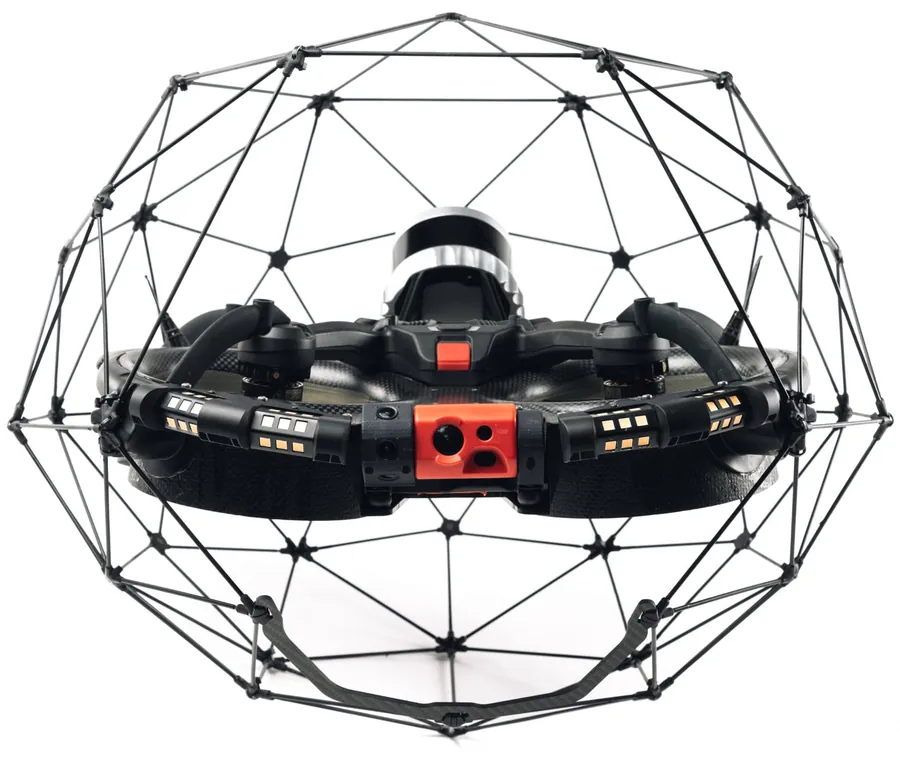
Flyability ELIOS 3 inspection drone

Every defect with a photo and its position – your expert assessor knows where to start

We fly – Inspectomatic, the reporting arm of our group of companies, analyses and produces your inspection report in the browser, with nothing to install: photos, videos, a 3D point cloud and located findings – per bunker or per flight and, on request, compared with earlier inspections. The point cloud can be exported in common formats for CAD, BIM or your maintenance software. The 3D point cloud with all located findings is produced by Inspectomatic – more on this at inspectomatic.de/punktwolken (in German). You will find more background on the analysis of bunkers and a project example from a waste bunker on inspectomatic.de (in German).

We do not produce assessments or expert reports. These are prepared by your expert assessors or concrete repair specialists you appoint, on the basis of the report.

Inspect bunker walls without emptying the bunker – write to us using the contact form.

The drone is better where access and overview are concerned:

  • It reaches upper wall areas, pillars and the crane runway without scaffolding or aerial work platforms.
  • Nobody has to enter the bunker, walk over the waste or work at height.
  • It records all walls without gaps instead of spot checks.
  • Every defect is located in the 3D point cloud.
  • The flight can be repeated: progressive concrete loss can be compared over the years.

People are better where contact with the component and decisions are concerned:

  • Cores, carbonation depth, concrete cover and strength
  • Hammer testing for voids and measuring crack widths
  • Assessment of findings, expert reports and planning of repairs

The drone takes care of visual inspection and mapping; your expert assessor tests specifically at the points our report marks. Our article on non-destructive testing gives an overview of these methods.

  • Operation by arrangement: as a rule, the bunker does not have to be empty or out of service. During the flight, the crane rests in the section being flown, or an area is closed off. We agree this with your operations team in advance.
  • Take-off point: the drone takes off from the edge of the bunker, a platform or a tipping point, for example. We agree the spot with you.
  • Fill level: the drone cannot see wall areas covered by waste or bulk material. At a low fill level, more of the wall is visible.
  • Visibility: dust, steam and mist from the bunker limit visibility. Areas without usable images are noted in the report.
  • Surface only: the drone does not test the concrete. Cores, carbonation depth and strength are determined by your expert assessor.

Plan your bunker repairs on reliable data – request an inspection

Tell us the asset and the occasion, and we will tell you which recordings and which report make sense.

Initial consultation: 30 minutes by video, pick a time directly.

  • We look forward to your enquiry and will get back to you promptly.

Or write to us

Which asset, what occasion, what time frame – a few lines are enough.

* Required. We do not pass your details on to third parties.

Frequently asked questions

When is a good time for a bunker inspection?
When the fill level is low, the drone sees more of the wall. Many operators therefore schedule the flight for a period with few deliveries or before planned repairs. We agree the date with your plant management and crane operators.
How long does the crane have to stop?
That depends on the size and layout of the bunker. We fly section by section, so the crane only pauses where the drone is currently flying. We agree the pauses with the crane operators in advance.
What protective equipment does your team need in the bunker?
Our team works from the edge of the bunker or a platform and wears the protective equipment required by your operating instructions, such as protective suits and respiratory protection. We clarify the requirements with your health and safety team before the job.
Is the bunker classed as a hazardous (Ex) area?
That depends on the plant and the material, for example with coal dust. In hazardous (Ex) areas, the operator decides whether the drone may be used. We clarify this before the job.
Do you provide figures on concrete cover or strength?
No. The drone sees the surface. Concrete cover, strength and carbonation depth are determined on the component by your expert assessor – specifically at the points our report shows.
Can concrete loss be tracked over several years?
Yes. Because we capture the bunker as a 3D point cloud each time, the same wall sections can be compared side by side over the years. On request, we include the comparison with earlier inspections in the inspection report; the assessment stays with your expert assessor.
Do your own pilots fly, and do you offer training?
Inspection flights in bunkers require experience – which is why our own pilots fly on our jobs. We do not offer pilot training. If you have your own ELIOS 3, we are happy to advise you on using it.