Skip to content
Send enquiryEnquiry

Drone inspection for industry & power stations: no scaffolding, shorter shutdowns

Kopterflug inspects hard-to-reach areas in industrial plants and power stations – with inspection drones inside, outside and underwater. Our drone keeps shutdowns short. Some plants can also be inspected without interrupting operations. No scaffolding, rope access technicians or cranes are needed – the inspection takes hours instead of days.

  • No scaffolding, no aerial work platform, nobody has to work at height
  • Every finding with a 4K photo and its position in the 3D point cloud
  • Shorter shutdowns and inspection costs up to 80% lower

A selection of Kopterflug clients and partners – operators in steel, chemicals, energy and logistics

  • Logo BASF
  • Logo Covestro
  • Logo Shell
  • Logo ArcelorMittal
  • Logo Gassco
  • Logo Mercedes-Benz
  • Logo swb
  • Logo Linde
  • Logo Uniper
  • Logo Fortum
  • Logo PreussenElektra
  • Logo Engie
  • Logo Mainova
  • Logo Evonik
  • Logo INEOS
  • Logo SABIC
  • Logo thyssenkrupp
  • Logo Aurubis
  • Logo Trimet
  • Logo KSB
  • Logo Henkel
  • Logo Beiersdorf
  • Logo Boehringer Ingelheim
  • Logo Volkswagen
  • Logo Konecranes
  • Logo Fraport
  • Logo WISAG
  • Logo Boskalis
  • Logo Dow
  • Logo HKM
  • Logo Komatsu
  • Logo Veolia
  • Logo Lapp
  • Logo Bahlsen
  • Logo Deutsche Bahn
  • Logo DP World
  • Logo DSV
  • Logo Haribo
  • Logo HeidelbergCement
  • Logo Huntsman
  • Logo ICL
  • Logo IKEA
  • Logo Minimax
  • Logo MTU
  • Logo Procter & Gamble
  • Logo Raffinerie Heide
  • Logo Remondis
  • Logo RheinEnergie
  • Logo Röchling
  • Logo Rossmann
  • Logo Sappi
  • Logo Siemens
  • Logo SMA Solar
  • Logo Smurfit Kappa
  • Logo Steuler-KCH
  • Logo Südzucker
  • Logo TenneT
  • Logo Thyssengas
  • Logo Salzgitter
  • Logo ZCR

Since 2017 Kopterflug has been using inspection drones and underwater drones to inspect areas of plants where conventional methods reach their limits.
We fly – Inspectomatic analyses: Inspectomatic, the reporting arm of our group of companies, produces your inspection report with photos, videos, a 3D point cloud and located anomalies – in the browser, with nothing to install (inspectomatic.de is in German). On this basis, your expert assessors evaluate the condition of your plants and apply non-destructive testing precisely where our report shows anomalies.

Detect corrosion and damage early

On concrete and steel, while repairs can still be planned – for forward-looking maintenance.
Safety: nobody has to enter confined or hazardous areas
The drone flies in – without scaffolding and without rope access technicians.

Documentation: every crack with a photo and its position

Cracks, abrasion and anomalies at welds – with 3D data, photos and videos.

Your plant goes back into service sooner – at lower cost

No scaffolding, no rope access work and no cranes, so the shutdown is shorter.

What plants look like inside – footage from our inspections

You receive safe inspections for your industrial plants. We use drones to inspect and digitise hard-to-reach and hazardous areas – in confined spaces, underwater or from the air. No scaffolding, rope access technicians or cranes are needed, and your staff stay out of the danger zones. You will find more technical articles under Insight.
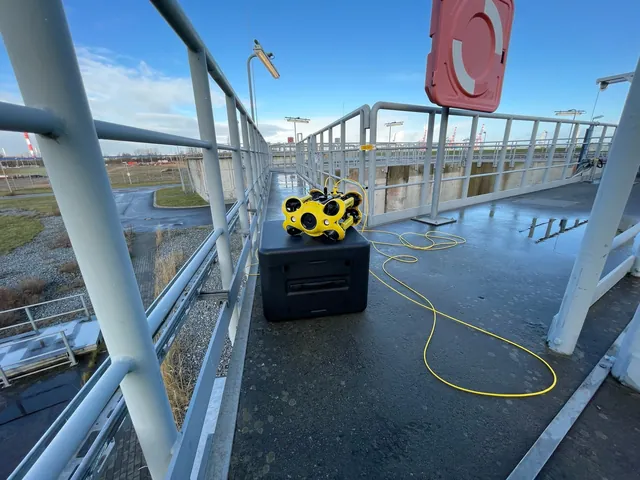
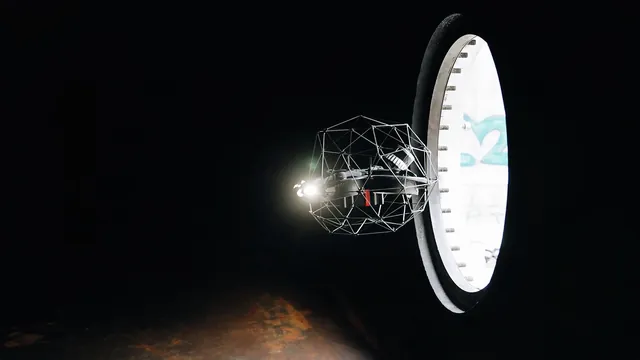
Write to us and learn how we inspect your plants without scaffolding, rope access technicians or cranes.

360° collision protection: wall contact does not end the flight

The Flyability ELIOS 3 flies into confined, hazardous spaces while personnel stay outside.

4K camera with its own lighting: images even in dark spaces

Its own lighting delivers sharp images even in dark, confined spaces; dense dust limits visibility.

LiDAR: every finding easy to locate again in the 3D point cloud

Creates a 3D point cloud during the flight in which findings are located – without scaffolding.

Your contacts from permit to inspection report

  • Christian Engelke
  • Philipp von der Born
  • Dipl.-Wirt.-Ing. (FH) Juliana Engelke

  • Stefan Wolf

Since 2017 we have been inspecting industrial plants and power stations – inside, outside and underwater. We plan every deployment with your site, from the permit to the inspection report.

Detailed footage, with sonar in murky water

Our underwater drone uses a high-resolution camera to capture detailed data, even in hard-to-reach areas; in murky water, the sonar shows the outlines of walls and internal fittings. This gives you a sound basis for assessing the condition of your installations.

You see anomalies in the live image

High-resolution footage shows anomalies during the inspection itself, so you can respond in a targeted way.

Safety: no diving operation in the tank

Remotely operated inspections replace risky diving operations and reduce the risk of accidents for your employees.

Drone inspections offer a flexible way to inspect hard-to-reach or hazardous areas safely, without scaffolding, rope access technicians or cranes. Since 2017 we have been using specialised drones for industrial inspections and supply you with detailed data for your maintenance.

Our services are aimed at operators of industrial plants and power stations – from internal flights in boilers, tanks and silos and industrial furnaces, refractory and flue gas ducts from the inside to external flights around plant components. Inside or outside, we plan every job together with you, with the focus on safety and a short shutdown.

Our areas of work include:

  • Industrial plants: inspection of crane runways, pipelines and installations at great heights
  • Power stations: inspection of boiler plants, bunkers, cooling towers, turbines and other hard-to-reach areas
  • Vessels and tanks: visual inspections and LiDAR scans of vessels and silos, and of sprinkler and water tanks, including underwater
  • Chimneys from the inside: recording damage, deposits and corrosion in the shaft
  • Underwater inspections: inspections of underwater structures and tanks with our Chasing M2 Pro Max underwater drone
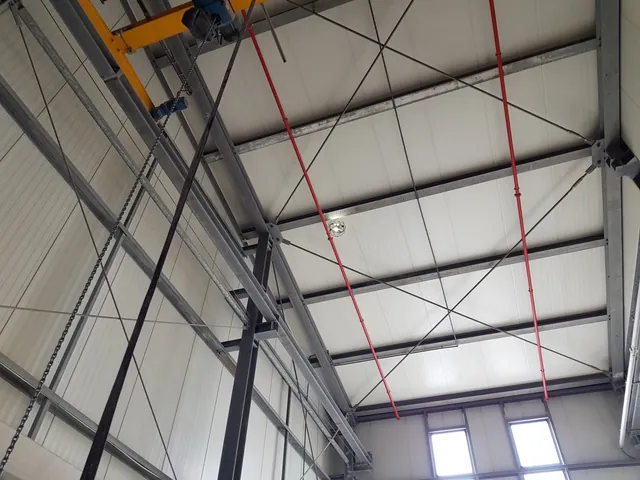
  • Halls and buildings of the plant: recording ceilings, roofs, façades and other critical components
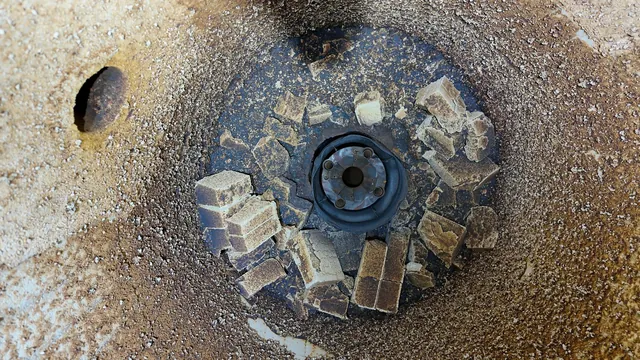
  • Industrial furnaces and refractory: inspection of furnaces, cyclones and flue gas ducts from the inside

With drones you reduce costs: our drone keeps shutdowns short. Some plants can be inspected without interrupting operations. From outside, we fly while the plant is running, and for internal flights in vessels the shutdown is shorter because scaffolding, rope access technicians and cranes are not needed. We plan every job individually and coordinate it with your site.
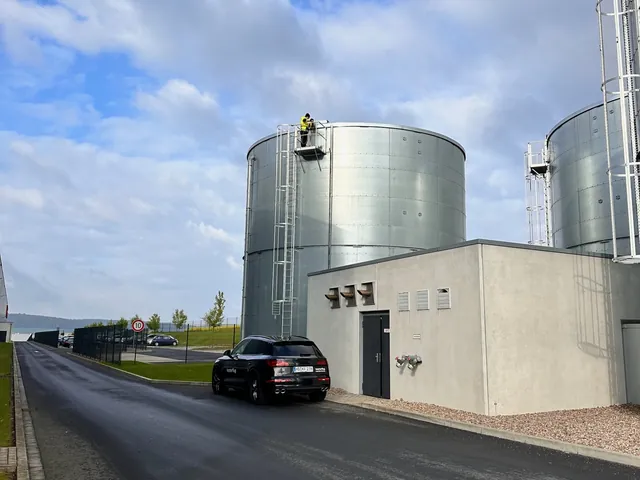
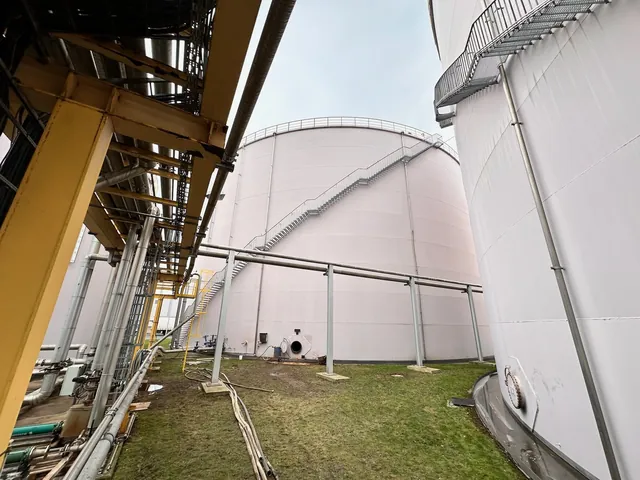
This is a selection of our services – we are happy to take on other inspection tasks by arrangement.

Plan inspections, spot damage – technical articles from our blog “Insight”

In our blog “Insight” you will find technical articles that help you plan inspections without scaffolding and with shorter shutdowns, and reduce costs.
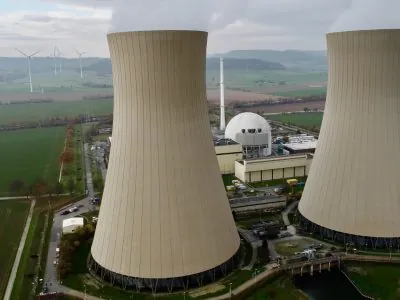
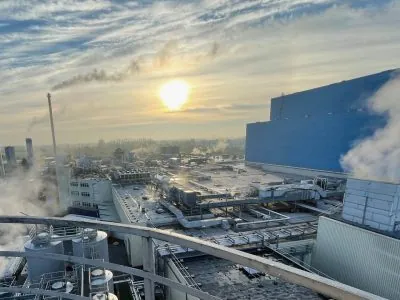
View over an industrial plant

Drone inspection in the process industry: 10 specific use cases

11 January 2025

In the process industry, drones inspect hard-to-reach areas without scaffolding. This article presents 10 use cases – from tanks and chimneys to pipelines. With 4K cameras, LiDAR and thermography, drones deliver detailed data, shorten shutdowns and improve safety. Learn how operators use them to reduce costs and plan the maintenance of their plants.

Read the article ›
Concrete damage on an industrial structure

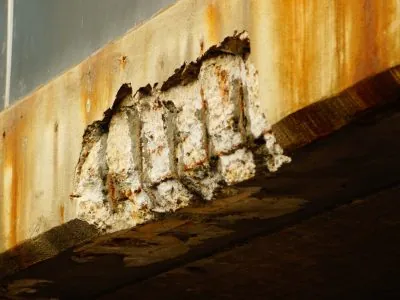
The 7 most common concrete defects and how to spot them early

5 November 2024

Concrete is indispensable in industrial plants – from supporting structures and foundations to chimneys and silos. Like all materials, concrete is susceptible to damage that can impair load-bearing capacity and service life. This article describes the seven most common types of concrete damage in industrial environments: from cracking and spalling to carbonation, chloride attack and biological growth. Learn how inspections reveal this damage early and how preventive maintenance reduces costs and improves safety.

Read the article ›
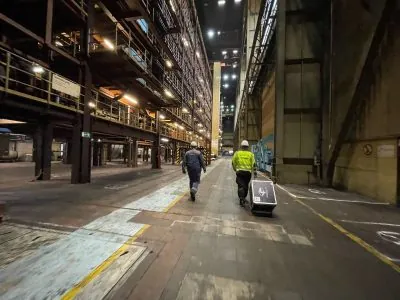
Two employees with a Flyability drone in the production hall of a steelworks

Up to 80% cost savings: hybrid inspection in industry

4 November 2024

Hybrid inspections combine drone inspection with targeted conventional testing. Your inspection costs can fall by up to 80% because scaffolding, cranes and rope access technicians are not needed. Shutdowns become shorter, and the drone delivers an initial overview in hours instead of days. Detailed testing follows only where it is needed. Learn how this approach reduces costs and provides digital documentation for your maintenance.

Read the article ›
Flyability ELIOS 3 in operation inside a tank

Drones in industrial inspection

3 November 2024

Drones such as the DJI M30T and the collision-tolerant Flyability ELIOS 3 make the inspection of industrial plants safer and more economical, without scaffolding or rope access technicians. With several sensors and 3D data they also reach hard-to-reach and hazardous areas. Learn what this technology offers for inspection in industry.

Read the article ›

Plan your next shutdown shorter – request a drone inspection

Tell us the asset and the occasion, and we will tell you which recordings and which report make sense.

Initial consultation: 30 minutes by video, pick a time directly.

  • We look forward to your enquiry and will get back to you promptly.

Or write to us

Which asset, what occasion, what time frame – a few lines are enough.

* Required. We do not pass your details on to third parties.

Frequently asked questions

When is an internal drone inspection worthwhile?

Whenever a spot could otherwise only be reached with scaffolding, rope access technicians, a crane or by man entry – such as boiler walls, silo roofs, the inside of chimneys or upper racking levels. In those cases the drone flies and personnel stay outside.

What advantages do internal drone inspections offer over traditional methods?

Internal inspections by drone reduce costs and the risk to personnel. Scaffolding, rope access technicians, cranes and man entry are not needed. As a result, the inspection takes hours instead of days, the shutdown is shorter, and several plants can be inspected during one shutdown. This makes maintenance planning easier.

Which types of enclosed spaces can be inspected with drones?

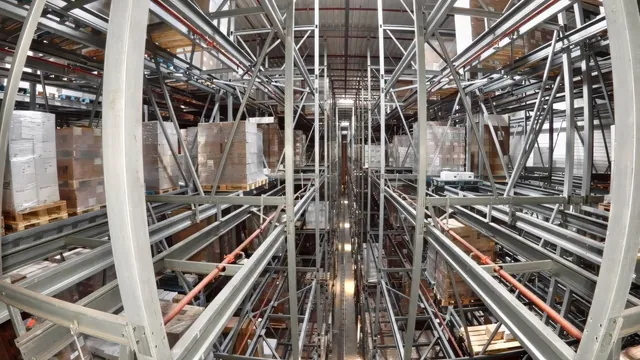
Drones can be used in a wide range of enclosed spaces: in boilers and furnaces, in tanks and silos, in chimneys, in cable ducts and shafts, halls and racking warehouses. The drone reaches areas where access is difficult or dangerous for people and would otherwise only be possible with considerable effort.

What safety precautions are needed for internal drone inspections?

Before every inspection, we assess the risks together with the operator and agree flight paths, access points and permits. The drone has collision protection and is flown around obstacles by experienced pilots. Regular maintenance and checks of the drones are part of every job.

How accurately can drones capture damage or anomalies in enclosed spaces?

With high-resolution cameras and LiDAR, drones record damage and anomalies such as cracks, corrosion or leaks – covering the entire surface rather than spot checks – and locate them in the 3D point cloud. How small a detectable defect can be depends on distance, light and surface; dust, steam or murky water limit visibility. The drone sees only surfaces: wall thickness, hammer testing, samples or exact crack widths are measured by your expert assessor, specifically at the points marked in our inspection report.

What are the challenges of drone inspections in confined or dark enclosed spaces?

Confined and dark enclosed spaces are a challenge for any inspection. Inspection drones such as the ELIOS 3 carry their own lighting and collision protection, so they manoeuvre safely even in difficult environments. In dark and convoluted areas, too, they deliver clear images and data as a basis for your decisions. Inspection flights in confined spaces require experience – which is why our own pilots fly them.

How do obstacles such as pipes or cables affect drone inspection?

Obstacles such as pipes or cables make an inspection more complicated. The Flyability ELIOS 3 is built for this: with its protective cage and stable control, it flies around obstacles and carries on inspecting. If it touches a structure, it remains airworthy.

How long does an internal drone inspection usually take?

The duration depends on the size and complexity of the inspection area. Because scaffolding, rope access technicians and cranes are not needed, the inspection takes hours instead of days. This shortens the shutdown and reduces costs.

Can internal drone inspections disrupt the normal operation of a plant?

That depends on the area. We always fly vessels, tanks, silos, boilers and refractory installations when they are out of service, emptied and released. Compared with conventional inspection methods, the shutdown there is considerably shorter: scaffolding, rope access technicians, cranes and man entry are not needed, and several plants can be inspected during one shutdown. In many hall areas operations continue; for racking, the aisle concerned is closed briefly. In short: our drone keeps shutdowns short, and some plants can be inspected without interrupting operations.

What data (e.g. images, videos, 3D scans) does an internal drone inspection capture?

We capture high-resolution photos, videos and 3D point clouds and, depending on the task, thermographic images. From these, Inspectomatic, the reporting arm of our group of companies, produces the inspection report with located anomalies. It gives a clear overview of the condition of the plant and serves your expert assessors as the basis for their assessment and for planning maintenance and repair work.

In which regions does Kopterflug offer inspections?

We inspect throughout Germany from our base in Bremen; other European countries on request. We come to your plant.

Which hazards to your staff are removed by drone inspection?
Nobody has to enter vessels, boilers or confined spaces: the drone flies in, personnel stay outside. This reduces the risk from hazardous substances, falls and confined spaces; gas-free testing for personnel is not needed. Vessels and boilers are out of service and released during the inspection.
Which drones does Kopterflug use for inspections?
For external inspections we use the DJI M30T, and for inspections in confined, hard-to-reach interiors the Flyability ELIOS 3. Underwater we work with the Chasing M2 Pro Max.
In which areas of industry does Kopterflug use drones?
We inspect industrial plants and power stations: inside, boilers, tanks, silos, industrial furnaces, refractory installations, flue gas ducts and chimneys, as well as halls and racking warehouses; outside, plant components; underwater, sprinkler and water tanks and basins.
How do drones reduce the need for hazardous work at height?
The drone reaches high and hard-to-reach spots, so climbing, abseiling and work on scaffolding are not needed for the inspection. This reduces the risk of falls and other accidents.
What applies in areas with hazardous substances or explosion protection?
The drone flies into contaminated areas while personnel stay outside. Vessels and boilers are out of service and released during the inspection. Whether and when an area can be flown – for example in a hazardous (Ex) area – is decided by the operator as part of their permit.
How do drones contribute to better documentation of inspections?
Drones deliver high-resolution photos and videos, thermographic images where required, and a 3D point cloud in which every anomaly is located. This results in traceable documentation that can be compared at the next inspection.
What economic benefits does using drones for inspection bring?
Fewer personnel are needed for the inspection, and shutdowns are shorter. Your inspection costs can fall by up to 80% because scaffolding, cranes and rope access technicians are not needed.
What do you as the operator prepare before the job?
You provide access and the permit – vessels out of service, emptied and released – and tell us about hazardous substances and Ex areas. We take care of flight planning, risk assessment and the weather check and coordinate them with you.
Which steps are required during the drone inspection?
During the inspection, the pilot and team coordinate continuously, work through fixed checkpoints, check the batteries regularly and record anomalies.
How is drone technology in industrial inspection developing?
Better sensors, AI-assisted analysis of footage, more autonomy in flight and links with digital twins will further improve industrial inspection.