

Safety: no divers in the tank or basin
Our underwater drone replaces risky diving operations and improves the safety of your employees.
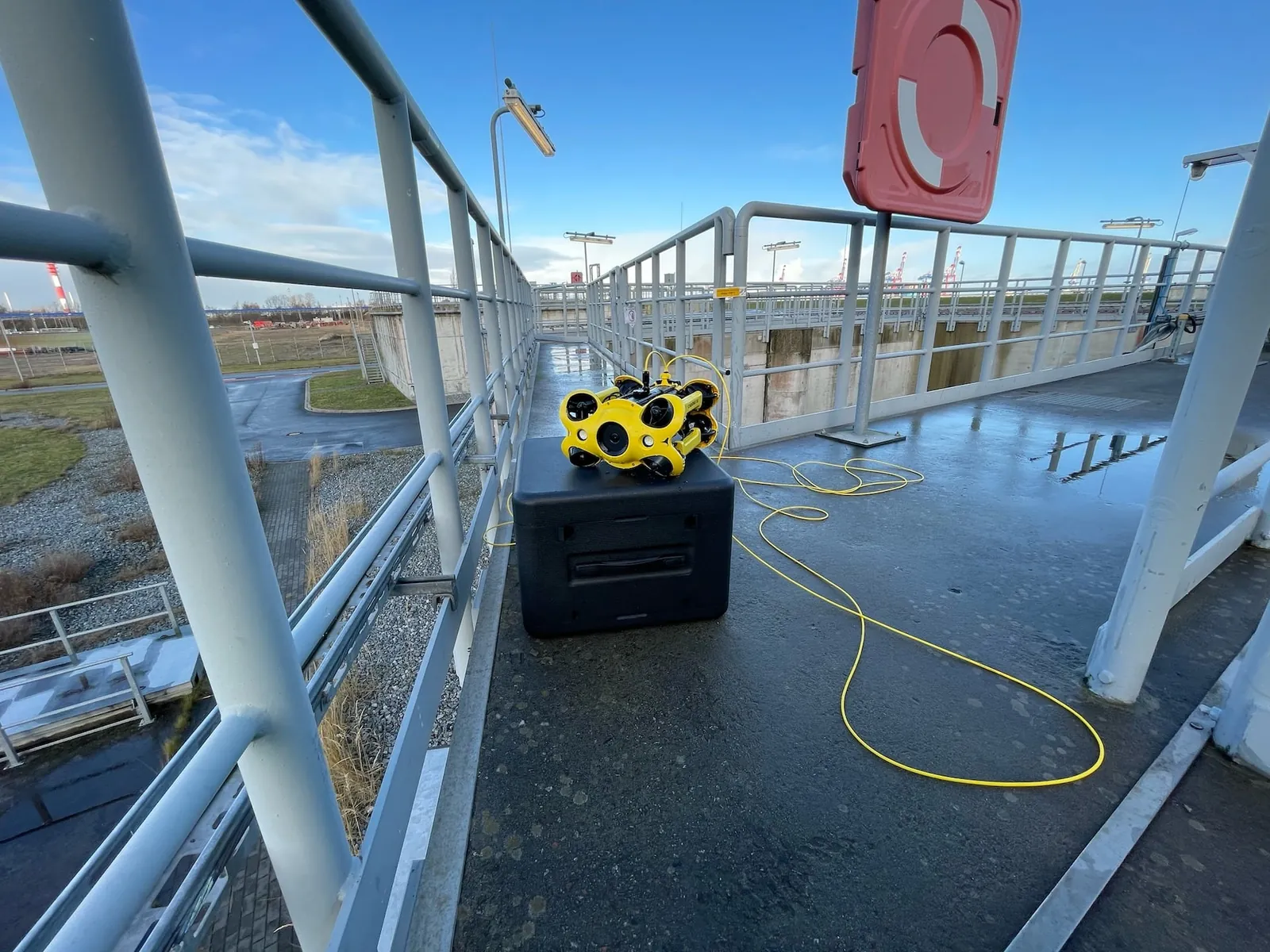
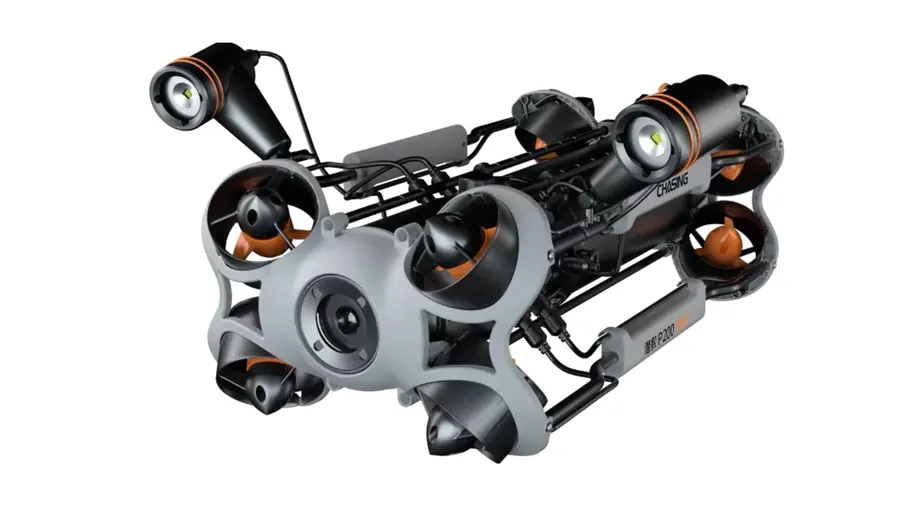
With our Chasing M2 Pro Max underwater drone we inspect and document underwater areas in industry and power stations – from sprinkler and water tanks to intake structures and cooling water pipes.
A selection of Kopterflug clients and partners – operators in steel, chemicals, energy and logistics










 Christian EngelkeGet in touch with our experts:[email protected]
Underwater inspection without divers: our underwater drone also inspects confined and demanding areas, and the elaborate safety precautions for diving operations are not needed. Our drones keep shutdowns short, and some installations can be inspected without interrupting operations – including sprinkler and water tanks: they do not have to be drained, and the fire water supply remains available. This reduces costs and protects your team.
Our underwater drone replaces risky diving operations and improves the safety of your employees.
The 4K camera delivers detailed footage from hard-to-reach areas; in murky water, the sonar shows the outlines of walls and internal fittings.
No divers are needed, the effort falls, and the tank does not have to be drained.
We record – Inspectomatic, the reporting arm of our group of companies, analyses: images, videos and sonar data document the condition, and the inspection report in the browser is the basis for your decisions (inspectomatic.de is in German).
For operators of industrial plants and infrastructure, what matters most in underwater inspection and maintenance is safety, accuracy and low effort. This is where our underwater inspections with our underwater drone offer clear advantages over conventional methods.
Our Chasing M2 Pro Max underwater drone is built for demanding and hard-to-reach underwater areas. It inspects confined and complex structures without divers and without elaborate safety precautions. This saves preparation and costs. Sprinkler and water tanks do not have to be drained, and the fire water supply remains available.
The 4K camera records the condition in detail; in murky water, the sonar shows outlines and distances. Damage and wear are documented with their location on the structure (wall, height, fitting) – the basis for targeted maintenance planning that lets you identify risks early.
Underwater inspections by drone improve safety. Instead of sending employees into hazardous underwater areas, the drone carries out the inspection. This reduces the risk of accidents.
In summary, underwater inspections by drone reduce effort and costs and improve safety – for operators of industrial plants and infrastructure, a tool for making inspection and maintenance predictable.
Reduce the effort of your inspections – write to our experts via the contact form or by email.
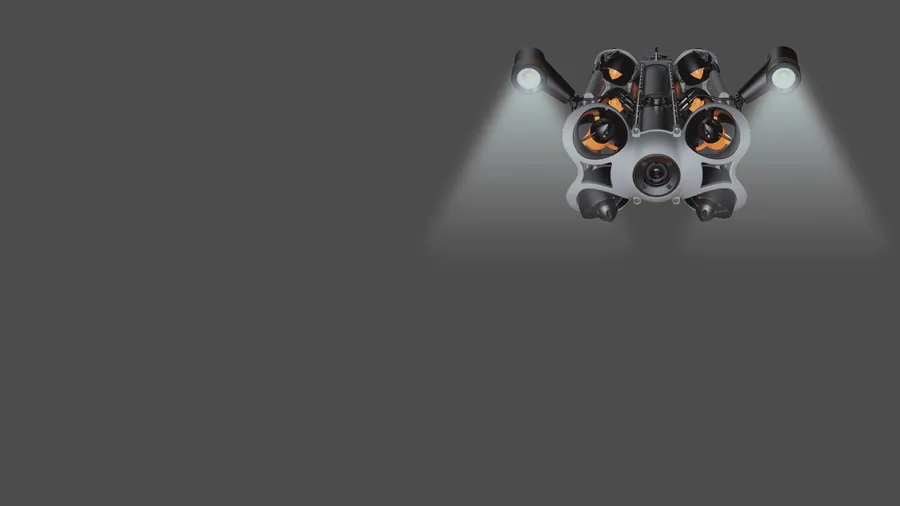
Inspect confined and hard-to-reach areas underwater – nobody has to go in
Christian Engelke Philipp von der Born
 Dipl.-Wirt.-Ing. (FH) Juliana Engelke
 Stefan Wolf
Our inspection concepts deploy our underwater drone specifically where it brings the greatest benefit for your plant – safely, even in demanding environments.
Underwater drones reduce safety risks and costs because no divers have to enter hazardous environments. The elaborate safety planning for diving operations is not needed, and the drone reaches confined areas where divers cannot work safely. 4K cameras and sonar deliver repeatable data for documentation. You will find a detailed comparison in our article Micro-ROV vs. diver.
The inspection report is produced by Inspectomatic, the reporting arm of our group of companies. You receive it in the browser, with nothing to install, together with the original material. The report shows photos, videos and anomalies with their location on the structure (wall, height, fitting). Your expert assessors carry out the assessment on this basis.
Detect damage underwater without draining the tank
Our underwater drone inspects underwater structures even in hard-to-reach or murky areas. The high-resolution camera and the sonar deliver data for documentation – the basis on which your expert assessors assess the condition of your installation.
In the live image, critical areas and possible damage become visible during the inspection itself; in the report they are shown with their location on the structure (wall, height, fitting). This allows you to respond in a targeted way and plan repairs.
Risky diving operations are not needed. The remotely operated drone reaches hazardous or hard-to-reach areas without endangering people.
Tell us the asset and the occasion, and we will tell you which recordings and which report make sense.
Initial consultation: 30 minutes by video, pick a time directly.
Underwater drones are suitable for hard-to-reach or hazardous underwater areas. Typical applications include inverted siphons, cooling water pipes, port facilities and dyke crossings, as well as industrial water basins, fire water tanks and sprinkler tanks. Channels, pipes and confined areas in which diving would be too risky or too expensive can also be inspected. In murky water, sonar additionally provides an image of the structures.
Our Chasing M2 Pro Max underwater drone has a high-resolution 4K camera with lighting and delivers clear images even in dark areas; in murky water visibility drops, and the sonar then shows the outlines of walls and internal fittings and measures distances. The sonar does not show corrosion or cracks. Together, image and sonar data provide a reliable basis for decisions on servicing and maintenance.
Underwater drones are remotely operated and do not put people in danger zones. This eliminates the hazards of conventional inspection methods such as diving. The drones are robustly built and designed for confined, murky or structurally unsafe areas.
Our underwater drone captures high-resolution 4K images and videos that reveal even small details. In murky water, sonar is added: it shows the outlines of walls and internal fittings and measures distances, but shows no corrosion and no cracks. The drone sees only surfaces: wall thicknesses, samples or exact dimensions of damage are measured by your expert assessor specifically at the points marked in our inspection report.
We bring enough batteries and recharge them on site. The drone surfaces briefly to change batteries, so longer inspections are also possible.
We do not offer pilot training. We carry out our inspections with our own experienced team – from planning and execution to the inspection report. You need no equipment of your own and no training for this. We know the particular requirements of underwater inspection from many deployments.
Yes, even in poor visibility – how well depends on the conditions. Murky water limits visibility; at close range, usable images can often still be captured. In very murky water or with many particles, the sonar shows the outlines of walls and internal fittings, but not details such as corrosion or cracks. That is why we check the conditions in advance and define the inspection objective together with you.
Our underwater drone is robustly built and designed for demanding environments. To work reliably, a few conditions should be met: the current at the site should be low so that the drone can navigate stably, and it needs some clearance to manoeuvre safely around obstacles.
Depth and range depend on the cable (tether); for sprinkler and water tanks they are sufficient. We clarify in advance what is possible at your installation.
We have inspected many sprinkler and water tanks, as well as underwater areas in industry, power generation and infrastructure, such as intake and extraction structures at power stations. Kopterflug knows the requirements of these environments and plans every inspection to suit the installation.
Our underwater drone is a safe alternative to diving operations. Possible problems are detected and documented early, so that you can make well-founded decisions.
Compared with conventional methods, underwater inspection by drone has several advantages:
Experience: we have inspected many sprinkler and water tanks and know the requirements in industry, power generation and infrastructure.
Greater safety: risky diving operations are not needed. The remotely operated drone reaches hazardous or hard-to-reach areas without endangering people.
Results in the live image: the high-resolution camera shows problem areas in the live image, and in murky water the sonar adds outlines. This makes maintenance planning easier.
Lower costs: sprinkler and water tanks do not have to be drained, the fire water supply remains available, and the inspection is completed in hours instead of days.
You receive an inspection report with photos, videos and anomalies with their location on the structure (wall, height, fitting) as the basis for your decisions.
You receive underwater inspections mainly for these areas:
Industrial plants: inspection of cooling water pipes, fire water tanks, sprinkler tanks and other underground or underwater structures.
Power generation: inspection of intake and extraction structures, cooling systems and other water-bearing plant components at power stations.
Infrastructure: inspection of inverted siphons, dyke crossing structures, channels, pipes and industrial water basins that are hard to access.
We do not offer offshore inspections; we work on land, in inland waters and in industrial plants. You receive traceable documentation of your underwater infrastructure.
An underwater inspection with Kopterflug usually proceeds as follows:
Preliminary discussion and planning: by email we clarify with you the areas to be inspected, possible challenges and the desired result. On this basis we plan the inspection to suit your installation.
Site visit and preparation: if necessary, we look at the site in advance and clarify safety-related and logistical details. We define the inspection area and check the current and the space available.
Carrying out the inspection: our team controls the underwater drone from the water surface and captures high-resolution images and videos and, in murky water, sonar data. You see anomalies in the live image.
Analysis and documentation: after the inspection, Inspectomatic, the reporting arm of our group of companies, analyses the data and produces the inspection report with photos, videos and anomalies with their location on the structure (wall, height, fitting). You also receive all the original footage.
Final meeting: in the final meeting we go through the results with you and show which anomalies your expert assessors should assess more closely.
The costs depend mainly on the scope and complexity of the inspection area, the duration of the deployment, the data capture requirements (such as sonar) and the local conditions.
You receive a quotation matched to your installation. Write to us via the contact form or by email, and we will clarify your requirements without obligation.
The lead time depends on the requirements and general conditions of the project. If the operating conditions are clear and no special permits are needed, we agree a date with you promptly.
If more complex preparations, permits or special conditions on site are required, the lead time may be a few weeks. It is best to contact us early so that we can plan together.
We have already carried out numerous inspection projects in various sectors and know our clients' requirements. We keep you informed of progress and results.
We plan every inspection to suit your installation and your objectives.
Safety takes priority in every inspection. This includes the following steps:
Fire-fighting readiness and securing the installation: since the water stays in the tank, the tank remains ready for fire-fighting. Whether and for how long pumps or inlets need to be secured during the inspection is agreed with you in advance.
Planning the inspection: every inspection is planned in detail. We clarify the conditions at the site, take possible risks into account and define the procedure.
Coordination with everyone involved: everyone involved knows the inspection plan and the safety measures; we clarify questions in advance.
Personnel with industrial experience: our team brings experience from industry and underwater inspection and works safely even in demanding environments.
Write to us via the contact form or by email at [email protected]. We clarify your requirements, the scope of the inspection and any particular challenges. You then receive a quotation.
Once you have placed the order, we agree the date with you and prepare the inspection. Our team carries it out at the agreed time in accordance with the agreed safety rules.