
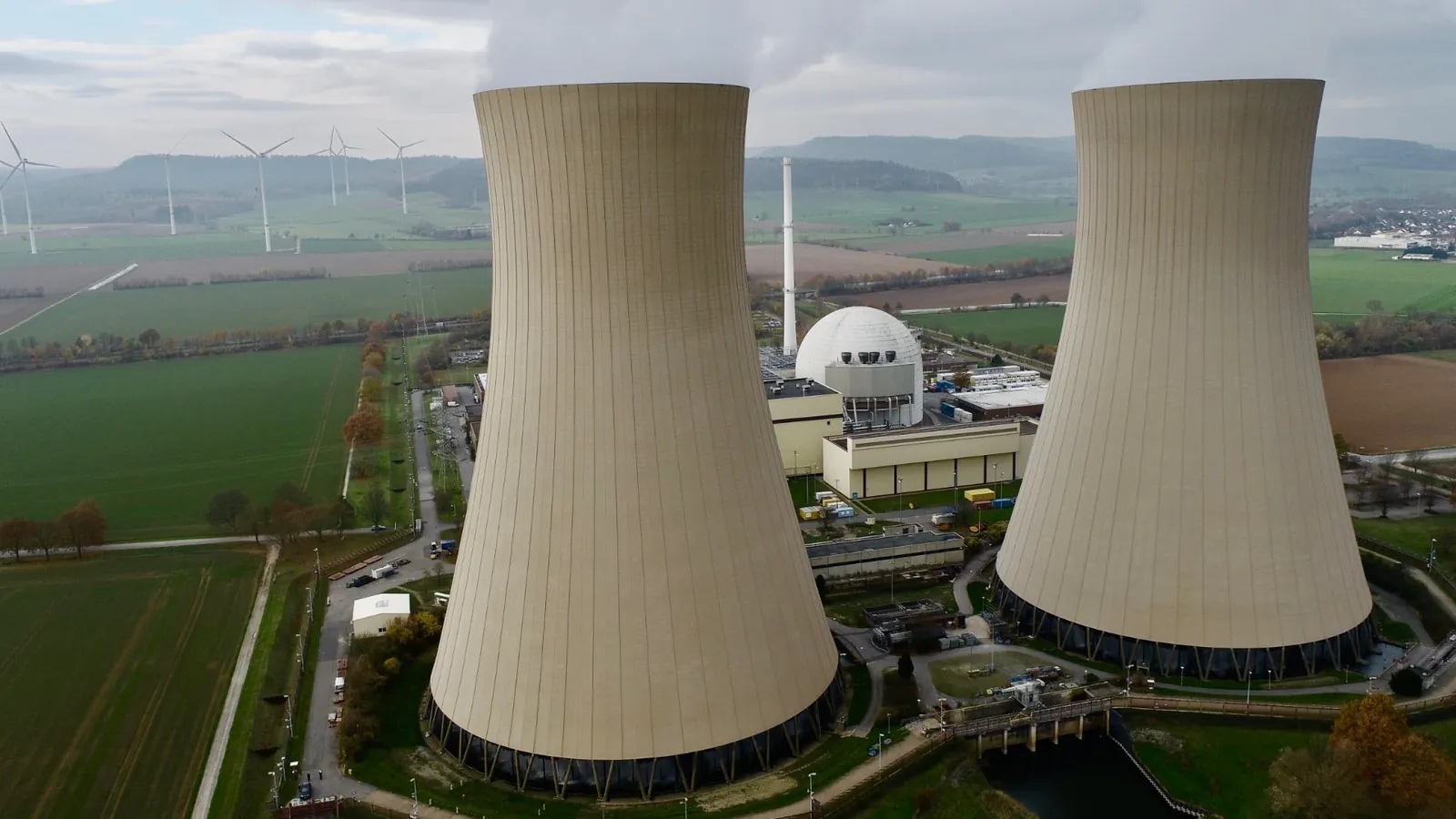
How drones support the decommissioning of nuclear power plants
In the decommissioning of nuclear power plants, drones for internal inspection and underwater drones deliver images and 3D data from areas that staff could only reach with considerable effort or under radiation exposure. Here you can read where they are used and what they contribute to planning.
Decommissioning nuclear power plants: less radiation exposure for your staff
Decommissioning a nuclear power plant is a major technical and organisational undertaking. Drones and underwater drones help to simplify planning and workflows: they provide insight into hard-to-reach areas, reduce staff exposure to radiation and replace elaborate access measures. In this article you will learn how these devices make decommissioning safer and more economical.
 Christian Engelke
Challenges in decommissioning nuclear power plants
1. Complex plant structure
- Nuclear power plants consist of hard-to-reach structures such as reactor pressure vessels, pipework and cooling systems.
- Access to these areas is often risky and technically demanding.
2. Ensuring radiation protection
- Even after the fuel assemblies have been removed, part of the plant remains contaminated or activated.
- Minimising radiation exposure for staff is the top priority.
3. Planning and documentation
- Decommissioning processes require precise data on the condition and contamination of components.
- This data is important for planning the work in a targeted way and documenting it transparently for the authorities.
4. Waste disposal logistics
- Properly separating, packaging and transporting contaminated and non-contaminated materials requires a well-developed logistics concept.
- Different waste categories, from low-level to high-level radioactive materials, have to be handled and stored differently.
5. Technical complexity of decontamination
- Surface decontamination by mechanical or chemical methods has to be adapted to different materials and levels of contamination.
- Some components have to be decontaminated remotely or with robotic assistance, which is technically very demanding.
6. Time and cost
- Decommissioning often extends over many years.
- Costs are hard to calculate and often rise during the process because of unexpected challenges.
7. Staffing requirements
- Highly qualified staff with specialist know-how are needed.
- Because decommissioning takes so long, expertise has to be passed on across generations.
- Demographic change makes it harder to recruit skilled workers.
8. Legal and social aspects
- Complex licensing procedures have to be completed.
- Public perception and acceptance play an important role.
- Statutory requirements may change during the long decommissioning phase.
Regulatory framework and decommissioning strategies
1. Direct dismantling
- In Germany, nuclear power plants are usually dismantled directly after final shutdown, instead of being safely enclosed for decades.
- Direct dismantling makes use of the existing infrastructure and the knowledge of the employees who know the plant.
2. Systematic dismantling sequence
- Dismantling follows an approved concept in several phases, from the dismantling of the systems to the reactor pressure vessel and its internals.
- Once the buildings have been dismantled and released, the “greenfield” state can be reached.
3. Technical procedures
- Surface decontamination of affected areas.
- Use of remotely operated systems for dismantling activated components.
- Continuous radiation measurements to prepare materials for clearance or final disposal.
Record controlled areas and spent fuel pools without staff entering them
The Flyability ELIOS 3 is an internal inspection drone with a protective cage for inspections in confined and hazardous areas, including controlled areas. In addition, our underwater drone makes it possible to inspect underwater structures in nuclear power plants, such as spent fuel pools or cooling water reservoirs. Both devices deliver data without personnel having to enter the areas.
1. Accessibility and flexibility
- By arrangement with your radiation protection team, the ELIOS 3 inspects:
- Rooms and shafts
- Ventilation ducts
- Large vessels with a sufficient cross-section
- The underwater drone inspects underwater areas such as:
- Spent fuel pools
- Cooling water systems
- Underground tanks and reservoirs
- Both systems are remotely operated; wall contact by the ELIOS 3 is not critical thanks to its protective cage.
2. Reducing radiation exposure
- Being remotely operated, the ELIOS 3 and the underwater drone make inspection possible without workers coming into direct contact with contaminated or hard-to-reach areas. This considerably reduces radiation exposure and improves safety.
3. Precise data capture
- LiDAR scans: 3D point clouds for planning and analysing dismantling processes.
- No radiation measurement: we do not use a radiation module; the dose rate is measured by your radiation protection team.
- 4K cameras: high-resolution footage, supported by powerful LEDs, makes it easier to identify cracks, corrosion and other defects.
- Sonar on the underwater drone: enables orientation and mapping of underwater structures even in poor visibility; the camera shows surface details.
4. Less effort and cost
- Using these technologies reduces laborious work such as:
- Scaffolding and rope access work
- Extensive safety measures
- Draining water reservoirs for inspections
- Data capture takes hours instead of days, and project costs fall.
Piping, vessels, concrete walls: a basis for your decommissioning planning
1. Inspecting pipe systems
- Capturing pipework and its routing before dismantling, to plan the cutting points.
- Locating the measuring points where your radiation protection team determines the dose rate.
- Identifying suitable access points for later dismantling work.
2. Inspecting tanks and vessels
- 3D capture of vessels and internals as a basis for decommissioning planning.
- Images and point clouds that add spatial context to your radiation protection team’s measurements.
- Documenting the condition of seals and joints for safe dismantling.
3. Analysing concrete and steel structures
- Documenting visible surfaces of concrete walls and steel structures before decontamination and dismantling.
- Locating areas to be sampled or measured.
- Dimensions and material transitions from the 3D point cloud to help select suitable dismantling techniques.
4. Underwater inspections
- Image and sonar recordings of spent fuel pools before decontamination.
- Capturing sediment and deposits in cooling water systems to plan their disposal.
- Documenting the condition of underwater internals to plan their dismantling.
5. Documentation
- Repeated recordings make decommissioning progress in contaminated areas traceable.
- 3D point clouds as a basis for planning and licensing documents.
- Traceable documentation of the decommissioning steps for authorities and supervisory bodies.
What drones contribute to planning, safety and documentation
The decommissioning of nuclear power plants makes not only technical but also ecological and economic demands. The Flyability ELIOS 3 and our underwater drone help operators to meet these demands.
1. Minimising risks and environmental impact
- Reduced radiation exposure for personnel through remotely operated inspection and documentation.
- Precise planning of decontamination measures through detailed preliminary inspections.
- Avoidance of unnecessary interventions through accurate recording of the condition before dismantling work.
2. Dismantling processes that are easier to plan
- Recording material conditions in hours instead of days for targeted dismantling planning.
- Better planned segmentation thanks to 3D point clouds of the plant structure.
- Less waiting time between dismantling steps through forward-looking planning and documentation.
3. Transparency and quality assurance
- Traceable documentation of the dismantling steps for the regulatory authorities.
- Image material to supplement the classification of materials for disposal planning.
- Detailed progress monitoring for transparent project control.
4. Integration into current decommissioning concepts
- Combination with proven decontamination and segmentation techniques.
- Integration into digital planning tools for end-to-end project management.
- Support in optimising disposal routes and material flows.
5. Forward-looking technology development
- Inspection and documentation technology is continually developing.
- With every deployment, new applications for complex decommissioning situations are added.
Images and 3D data from areas your staff could only reach with radiation exposure
Drones do not replace decontamination or segmentation technology in the decommissioning of nuclear power plants, but they deliver images and 3D data from areas that personnel could only reach with radiation exposure or considerable effort. The ELIOS 3 records enclosed spaces, vessels and shafts, and the underwater drone records pools and cooling water systems. This makes planning and documentation simpler and reduces the radiation exposure of personnel.