

Occupational safety: your staff stay outside
The drone flies into the installation, personnel stay outside.
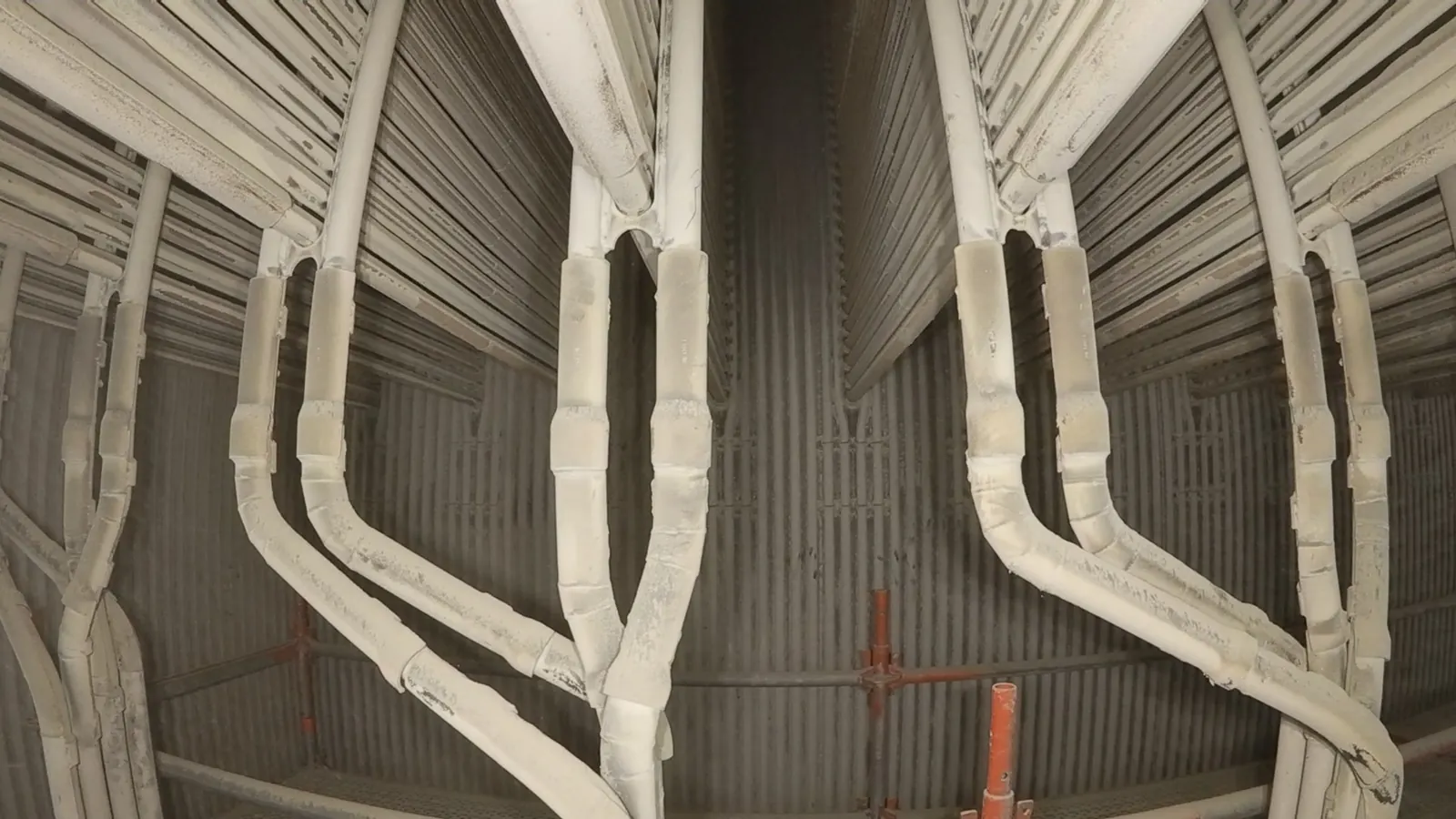
With the Flyability ELIOS 3 drone we inspect and digitise enclosed spaces in industrial plants and power stations – boilers, tanks, silos, chimneys, halls and racking.
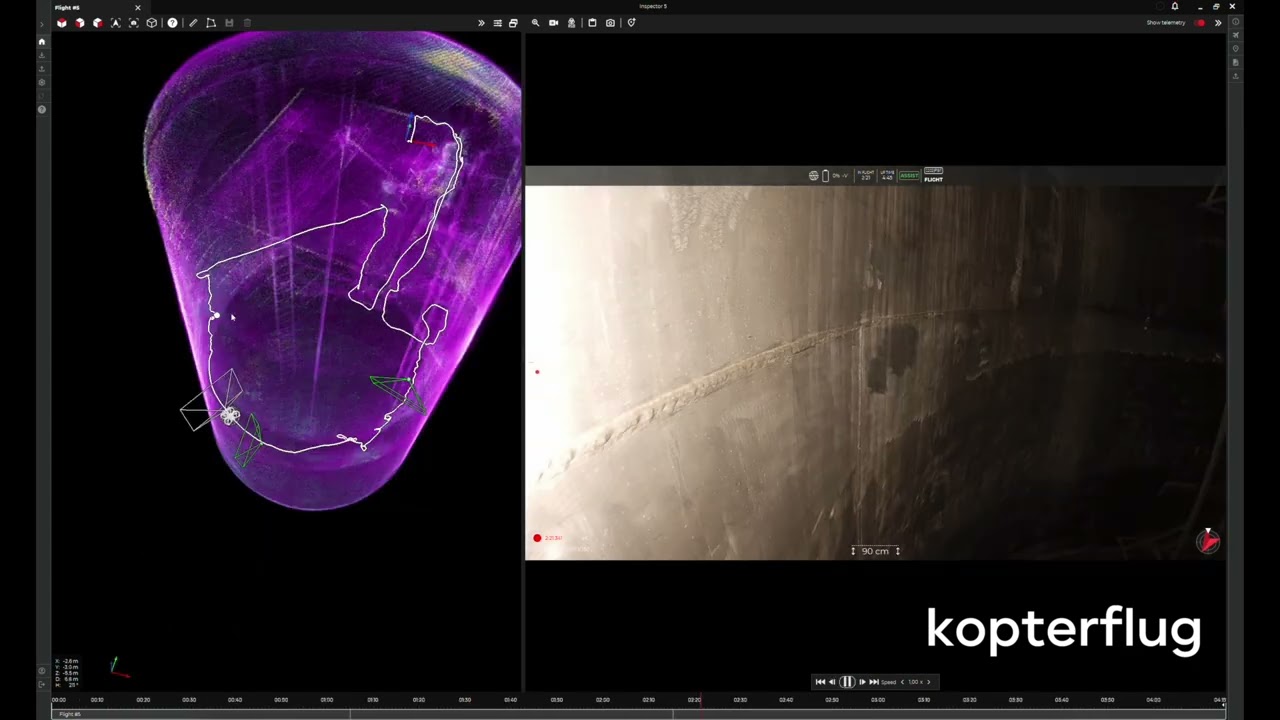 Watch the video on YouTube
A selection of Kopterflug clients and partners – operators in steel, chemicals, energy and logistics






 Christian EngelkeGet in touch with our experts:[email protected]
An inspection must deliver meaningful, precisely locatable data and be comparable at the next inspection. In my experience, the Flyability ELIOS 3 is the right drone for these requirements.
The drone flies into the installation, personnel stay outside.
LiDAR produces a true-to-scale 3D point cloud, together with complete footage of the agreed areas, even in difficult environments.
No scaffolding, no rope access work and no cranes, so the shutdown is shorter.
We fly – Inspectomatic, the reporting arm of our group of companies, analyses: photos, thermographic and LiDAR data become your inspection report with located findings in the browser. The 3D point cloud with all located findings is produced by Inspectomatic – more on this at inspectomatic.de/punktwolken (in German).
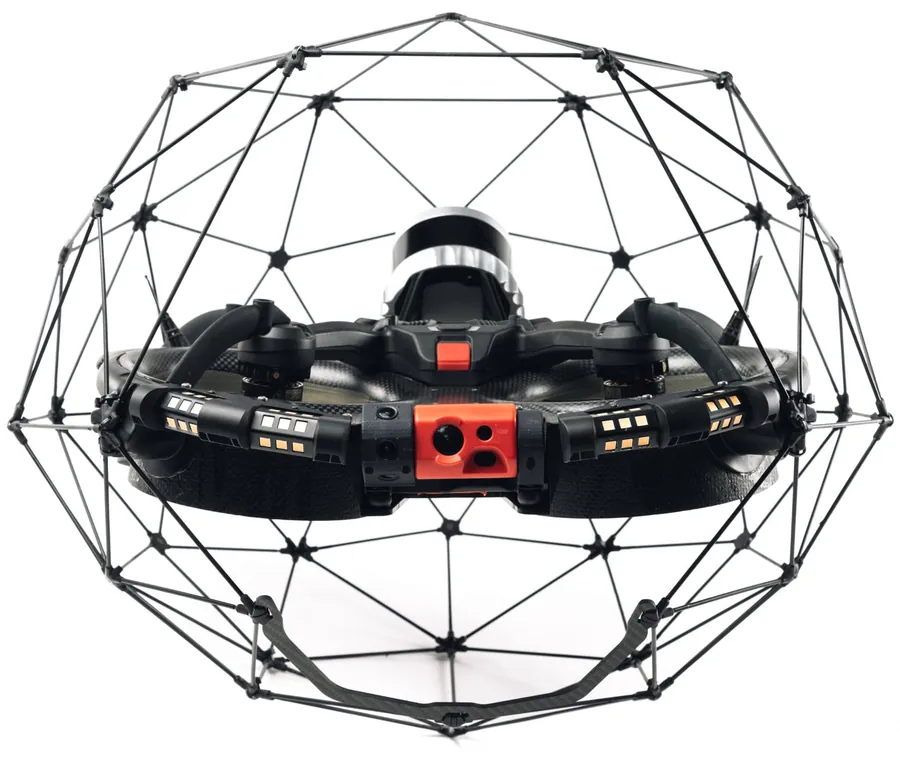
For maintenance teams in industry, what matters most in inspection and maintenance is safety, accuracy and short shutdowns. This is where drone inspections – particularly with the Flyability ELIOS 3 – offer clear advantages over conventional methods.
Reduce costs and shorten shutdowns – write to our experts via the contact form or by email.
Confined, dark spaces: the ELIOS 3 flies in, your staff stay outside
The Flyability ELIOS 3 flies into confined, hazardous spaces while personnel stay outside.
With their own lighting, they deliver sharp images and videos even in dark, confined spaces.
Creates a detailed 3D point cloud during the flight in which findings are located – without scaffolding.
Christian Engelke Philipp von der Born
 Dipl.-Wirt.-Ing. (FH) Juliana Engelke
 Stefan Wolf
Our inspection strategies use the Flyability ELIOS 3 drone in a targeted way to enable safe inspections and meaningful data in demanding environments.
The Flyability ELIOS 3 is designed specifically for inspections in confined, hard-to-reach and hazardous areas. It offers a collision-tolerant design, LiDAR-based 3D scans and high-resolution imaging. Scaffolding and rope access technicians are not needed, which reduces costs and improves safety. Read more in our article 10 things that set the ELIOS 3 apart from other inspection drones.
The ELIOS 3 data is analysed by Inspectomatic, the reporting arm of our group of companies. You receive the inspection report in the browser, with nothing to install, together with the original material. The report shows photos, videos and the 3D point cloud with located findings.
Tell us the asset and the occasion, and we will tell you which recordings and which report make sense.
Initial consultation: 30 minutes by video, pick a time directly.
The ELIOS 3 is suited to inspections in hard-to-reach areas such as boilers, tanks, silos, chimneys, industrial furnaces and refractory installations, waste bunkers, cooling towers, cable ducts and shafts, hall ceilings and racking warehouses. We use it for operators in power generation, chemicals, steel, oil and gas, and logistics.
The ELIOS 3 uses LiDAR for 3D capture and mapping, high-resolution cameras for visual inspection and a thermal camera to detect thermal anomalies. You can see the live image during the flight.
The Flyability ELIOS 3 is very well suited to inspections in hazardous environments, as it is collision-tolerant and was developed specifically for confined spaces. The drone flies into confined, dark and unsafe areas without personnel having to enter. Whether an area can be flown, for example in a potentially explosive atmosphere, is decided by the operator as part of its release procedure.
The ELIOS 3 captures detailed 3D scans, high-resolution images, videos and thermal data. From these, Inspectomatic, the reporting arm of our group of companies, produces the inspection report with located anomalies – depending on the order, per installation or per flight and, on request, compared with earlier inspections. It is the basis for the condition assessment by your expert assessors and for maintenance planning. The drone sees only surfaces: wall thicknesses, hammer testing, samples or exact crack widths require a measurement on the component, which the expert assessor takes specifically at the marked points.
Each flight covers one section of the inspection. We bring enough batteries and recharge them on site – so only short breaks for battery changes are needed between flights.
Inspection flights in confined spaces require experience – which is why our own pilots fly on our deployments. We do not offer pilot training. If you have your own ELIOS 3, we will be happy to advise you on how to use it.
Yes, the ELIOS 3 is designed for dark and dusty environments. It carries powerful LED lighting that can be adjusted to reduce reflections from dust. In very dense dust, every camera reaches its limits; we clarify this with you in advance.
The ELIOS 3 has a protective cage that shields the drone from impacts and collisions in confined spaces. This means it remains airworthy even when it touches obstacles in tight environments.
Flyability offers an additional ultrasonic module for the ELIOS 3. We use the ELIOS 3 for visual inspection and 3D capture: the images cover the entire surface rather than spot checks, are located in the 3D point cloud and show where corrosion, erosion or other anomalies are. Ultrasonic wall thickness measurements (UT measurements) are taken by the expert assessor specifically at the points marked in our inspection report – without scaffolding for the entire surface.