Skip to content
Send enquiryEnquiry

Inspect the lining of furnaces and flue gas ducts by drone – without scaffolding

Internal inspection of industrial furnaces, refractory linings and flue gas ducts with the Flyability ELIOS 3. The drone flies through the manhole into the shut-down installation while your staff stay outside. You receive photos, videos and a 3D point cloud with located findings – without scaffolding, without rope access, without man entry.

  • No scaffolding, no rope access, nobody goes in
  • Hours instead of days, shorter shutdown
  • Findings located in the 3D point cloud

A selection of Kopterflug clients and partners – operators in steel, chemicals, energy and logistics

  • Logo BASF
  • Logo Covestro
  • Logo Shell
  • Logo ArcelorMittal
  • Logo Gassco
  • Logo Mercedes-Benz
  • Logo swb
  • Logo Linde
  • Logo Uniper
  • Logo Fortum
  • Logo PreussenElektra
  • Logo Engie
  • Logo Mainova
  • Logo Evonik
  • Logo INEOS
  • Logo SABIC
  • Logo thyssenkrupp
  • Logo Aurubis
  • Logo Trimet
  • Logo KSB
  • Logo Henkel
  • Logo Beiersdorf
  • Logo Boehringer Ingelheim
  • Logo Volkswagen
  • Logo Konecranes
  • Logo Fraport
  • Logo WISAG
  • Logo Boskalis
  • Logo Dow
  • Logo HKM
  • Logo Komatsu
  • Logo Veolia
  • Logo Lapp
  • Logo Bahlsen
  • Logo Deutsche Bahn
  • Logo DP World
  • Logo DSV
  • Logo Haribo
  • Logo HeidelbergCement
  • Logo Huntsman
  • Logo ICL
  • Logo IKEA
  • Logo Minimax
  • Logo MTU
  • Logo Procter & Gamble
  • Logo Raffinerie Heide
  • Logo Remondis
  • Logo RheinEnergie
  • Logo Röchling
  • Logo Rossmann
  • Logo Sappi
  • Logo Siemens
  • Logo SMA Solar
  • Logo Smurfit Kappa
  • Logo Steuler-KCH
  • Logo Südzucker
  • Logo TenneT
  • Logo Thyssengas
  • Logo Salzgitter
  • Logo ZCR

Furnaces, combustion chambers, cyclones and flue gas ducts are shut down for the inspection in any case. The length of the shutdown is then often determined by access: erecting scaffolding, setting up rope access, sending personnel in. With the Flyability ELIOS 3 none of this is needed. The caged drone flies through the manhole, records walls, vaults, burners and internals at close range and produces a 3D point cloud as it goes. Nobody has to enter the installation.

Nobody has to enter the furnace

Nobody goes into the furnace, the cyclone or the duct: the drone flies, personnel stay outside.
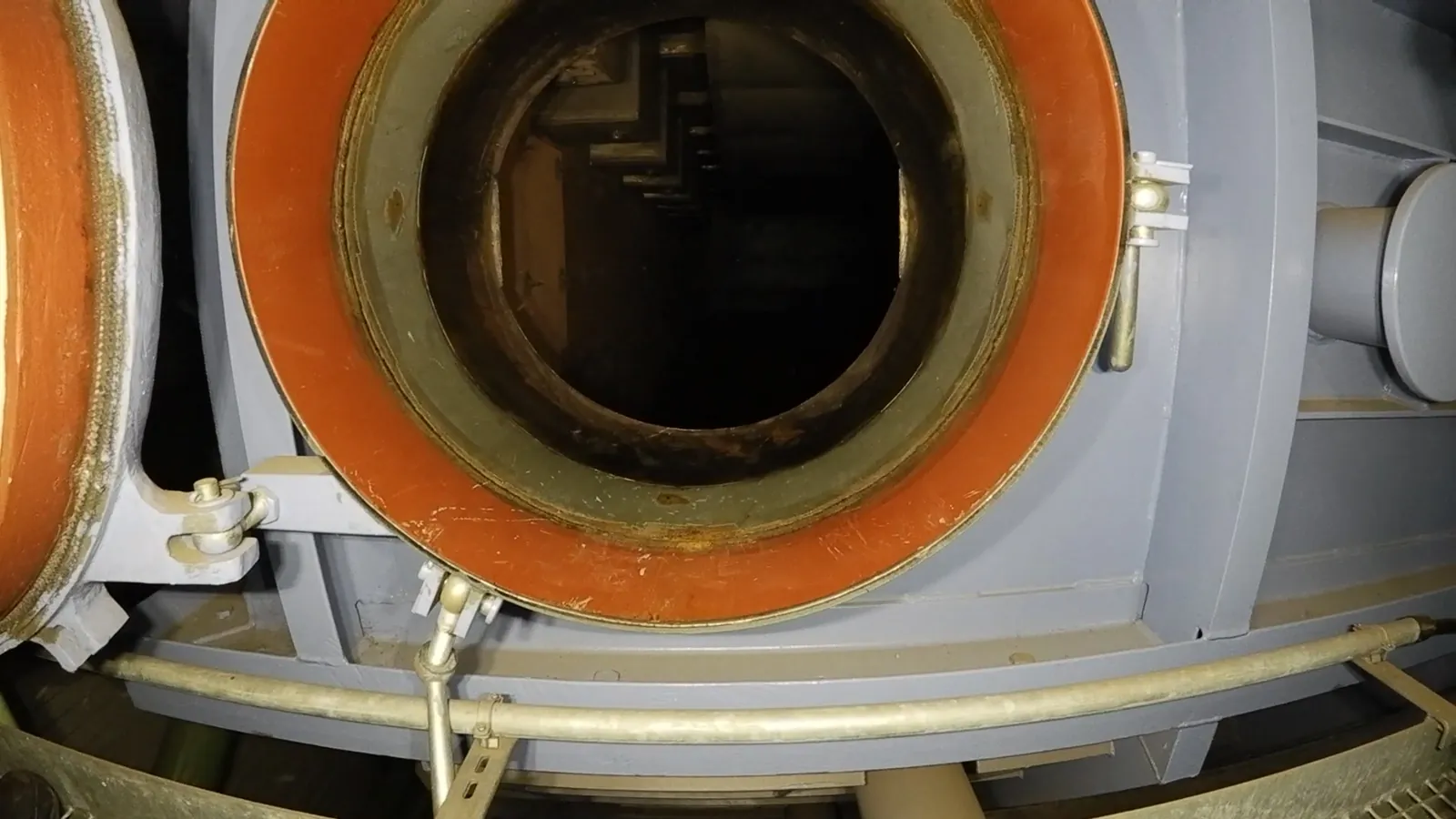
The whole lining instead of spot checks
The whole lining from floor to vault instead of spot checks from the scaffolding – every anomaly located in the 3D point cloud.

Inspection costs up to 80% lower

No scaffolding and no rope access are needed. Your inspection costs can fall by up to 80%.

What plants look like inside – footage from our inspections

We fly installations with refractory brickwork or lining and the ducts behind them – in the steel, cement, glass and chemical industries, in petrochemicals, in power stations and incineration plants:

  • Blast furnaces and hot blast stoves (Cowpers)
  • Rotary kilns, preheaters and cyclones
  • Industrial and process furnaces, combustion chambers and burner shafts
  • Reactors with refractory lining
  • Flue gas and exhaust ducts and collectors
  • Chimneys from the inside – brick, concrete or steel, including those with inner flues made of GRP

The ELIOS 3 shows the visible condition of the surface. Typical findings are:

  • Cracks, spalling and broken-out bricks
  • Eroded or open joints
  • Deformation, bulging or displaced brick courses
  • Deposits, build-up and coking
  • Abrasion on walls, deflectors and dip tubes
  • Corrosion on anchors, steelwork and exposed components
  • Damage to dip tubes, burners and other internals

Every finding appears in the inspection report with a photo and its position in the 3D point cloud. This lets your expert assessor or refractory contractor find the spot again – including at the next inspection.

Your furnace goes back into service sooner

No scaffolding, no rope access, nobody goes in: data capture takes hours instead of days.

Several installations in one shutdown

We fly the furnace, cyclones and ducts one after another while the installation is released.

Every finding easy to locate again

The ELIOS 3 produces a 3D point cloud showing the flight path and the position of every finding.

Your contacts from permit to inspection report

  • Christian Engelke
  • Philipp von der Born
  • Dipl.-Wirt.-Ing. (FH) Juliana Engelke
  • Stefan Wolf

We plan inspections of industrial furnaces, refractory and flue gas ducts together with your maintenance team and your refractory contractor – since 2017, with our own pilots and the Flyability ELIOS 3.
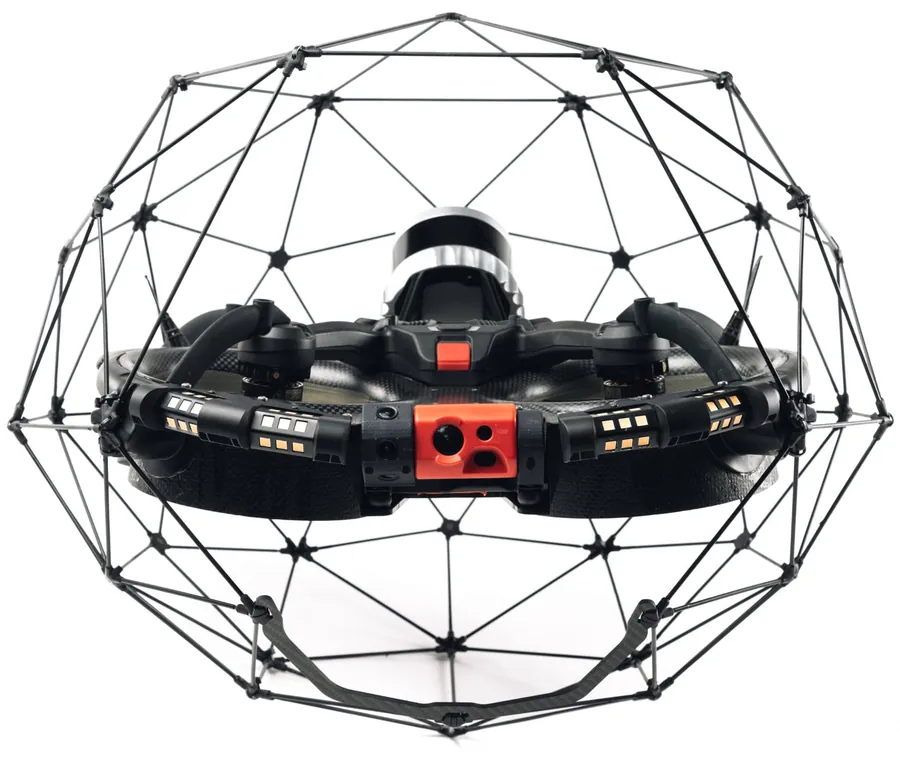
Flyability ELIOS 3 inspection drone

Every defect with a photo and its position – your expert assessor knows where to start

We fly – Inspectomatic, the reporting arm of our group of companies, analyses and produces your inspection report in the browser: photos, videos, a 3D point cloud and located findings – depending on the order, per installation or per flight and, on request, compared with earlier inspections. We export the point cloud in common formats for CAD, BIM or your maintenance software. The 3D point cloud with all located findings is produced by Inspectomatic – more on this at inspectomatic.de/punktwolken (in German). You will find more background on the analysis of industrial furnaces and flue gas ducts on inspectomatic.de (in German) – including a project example from a swirler at a blast furnace.

We do not produce assessments or expert reports. These are prepared by your expert assessors or specialists you appoint, on the basis of the report. Among others, we work with the specialist firm Züblin ZCR and with I.S.T. Ingenieurbüro für Schornsteintechnik, and agree the scope with them in advance.

Shorter shutdowns for your furnaces and flue gas ducts – write to us using the contact form.

The drone is better where access and overview are concerned:

  • It reaches vaults, burner areas, cyclone cones and duct roofs without scaffolding, rope access or cranes.
  • Nobody has to enter the installation or work at height.
  • It records the whole surface without gaps instead of spot checks.
  • Every anomaly is located in the 3D point cloud.
  • The flight can be repeated: wear and build-up can be compared over the years.

People are better where contact with the component and decisions are concerned:

  • Assessment of findings and expert reports
  • Measurements on the component: hammer testing, residual thickness, samples, crack widths
  • Decisions on repair, relining and continued operation

The drone takes care of visual inspection and mapping; your expert assessor measures specifically at the points our report marks. Our article on non-destructive testing gives an overview of these methods.

  • Out of service: we always fly furnaces, combustion chambers, cyclones, ducts and chimneys from the inside during a shutdown. The installation is out of service, sufficiently cooled, cleaned if necessary and released.
  • Access: the drone needs an opening to fly in through, such as a manhole or an inspection opening. Whether your installation is suitable we clarify in advance using drawings or photos.
  • Visibility: dust, soot and residual smoke limit visibility. Where they are too dense, the drone cannot deliver usable images.
  • Surface only: the drone sees the surface of the lining. It does not record wall thicknesses, voids or the condition behind the surface – not even with thermography.

Plan your next shutdown shorter – request an inspection

Tell us the asset and the occasion, and we will tell you which recordings and which report make sense.

Initial consultation: 30 minutes by video, pick a time directly.

  • We look forward to your enquiry and will get back to you promptly.

Or write to us

Which asset, what occasion, what time frame – a few lines are enough.

* Required. We do not pass your details on to third parties.

Frequently asked questions

How large does the opening for flying in need to be?
The ELIOS 3 flies through the opening with its protective cage, so the opening must be slightly larger than the cage. We check the dimensions of the opening and the route to it, for example via platforms or stairs, in advance using your drawings or photos. If no opening is suitable, we will tell you before the job.
What happens if there is still dust or soot in the installation?
After shutdown, dust can settle; if necessary, the operator ventilates or cleans beforehand. The drone carries its own lighting. We choose the flight path and distance so that as little dust as possible is stirred up. Areas where visibility is insufficient are noted in the inspection report.
Does the 3D point cloud also show deformation of the brickwork?
Yes. The point cloud maps the geometry of the surface, and bulges, displaced brick courses or thick build-up become visible in it as deviations. Exact dimensions at individual points are determined by your expert assessor specifically where our report marks anomalies.
Which chimneys do you fly from the inside?
Brick chimneys, concrete and steel chimneys, and chimneys with inner flues, including GRP flues. Typical findings are eroded masonry, cracks, deposits, delamination on GRP flues and damaged acoustic cassettes. Which opening we fly in through – inspection opening, flue gas inlet or chimney top – we clarify with you in advance.
How do you coordinate the job with our shutdown?
Before the shutdown, we agree with your maintenance team which installations are flown in which order, which openings are used and when the permit will be in place. We bring enough batteries and recharge on site. You see anomalies in the live image, and you receive the inspection report promptly, as agreed.
Can inspections be compared over several years?
Yes. Because we capture the installation as a 3D point cloud each time, the same spots can be compared side by side over the years – for example whether abrasion is progressing or build-up is increasing. On request, we include the comparison with earlier inspections in the inspection report; the assessment stays with your expert assessor.
What applies with residual gases or in hazardous (Ex) areas?
The installation is released for the flight; the operator sets the conditions for this. In hazardous (Ex) areas, the operator decides whether the drone may be used. Gas-free testing for personnel is not needed, because nobody enters the installation.
Do your own pilots fly, and do you offer training?
Inspection flights in furnaces, cyclones and ducts require experience – which is why our own pilots fly on our jobs. We do not offer pilot training. If you have your own ELIOS 3, we are happy to advise you on using it.
What experience does Kopterflug have with refractory installations?
Since 2017 Kopterflug has been inspecting industrial plants by drone, including blast furnaces, reactors, cyclones, incineration plants and flue gas ducts in the chemical, petrochemical, steel and cement industries. We inspect throughout Germany; other European countries on request.