Skip to content
Send enquiryEnquiry

Inspect cable ducts, cable culverts and shafts by drone – nobody has to enter the confined space

Internal inspection of cable ducts, service and utility ducts, underground ducts and shafts with the Flyability ELIOS 3. The drone flies down through the access shaft and along the duct while your staff stay at the entrance. You receive photos, videos and a 3D point cloud in which every photo is assigned to its section of the duct.

  • Nobody enters the confined space
  • No gas-free testing for personnel
  • Every photo with its section in the 3D point cloud

A selection of Kopterflug clients and partners – operators in steel, chemicals, energy and logistics

  • Logo BASF
  • Logo Covestro
  • Logo Shell
  • Logo ArcelorMittal
  • Logo Gassco
  • Logo Mercedes-Benz
  • Logo swb
  • Logo Linde
  • Logo Uniper
  • Logo Fortum
  • Logo PreussenElektra
  • Logo Engie
  • Logo Mainova
  • Logo Evonik
  • Logo INEOS
  • Logo SABIC
  • Logo thyssenkrupp
  • Logo Aurubis
  • Logo Trimet
  • Logo KSB
  • Logo Henkel
  • Logo Beiersdorf
  • Logo Boehringer Ingelheim
  • Logo Volkswagen
  • Logo Konecranes
  • Logo Fraport
  • Logo WISAG
  • Logo Boskalis
  • Logo Dow
  • Logo HKM
  • Logo Komatsu
  • Logo Veolia
  • Logo Lapp
  • Logo Bahlsen
  • Logo Deutsche Bahn
  • Logo DP World
  • Logo DSV
  • Logo Haribo
  • Logo HeidelbergCement
  • Logo Huntsman
  • Logo ICL
  • Logo IKEA
  • Logo Minimax
  • Logo MTU
  • Logo Procter & Gamble
  • Logo Raffinerie Heide
  • Logo Remondis
  • Logo RheinEnergie
  • Logo Röchling
  • Logo Rossmann
  • Logo Sappi
  • Logo Siemens
  • Logo SMA Solar
  • Logo Smurfit Kappa
  • Logo Steuler-KCH
  • Logo Südzucker
  • Logo TenneT
  • Logo Thyssengas
  • Logo Salzgitter
  • Logo ZCR

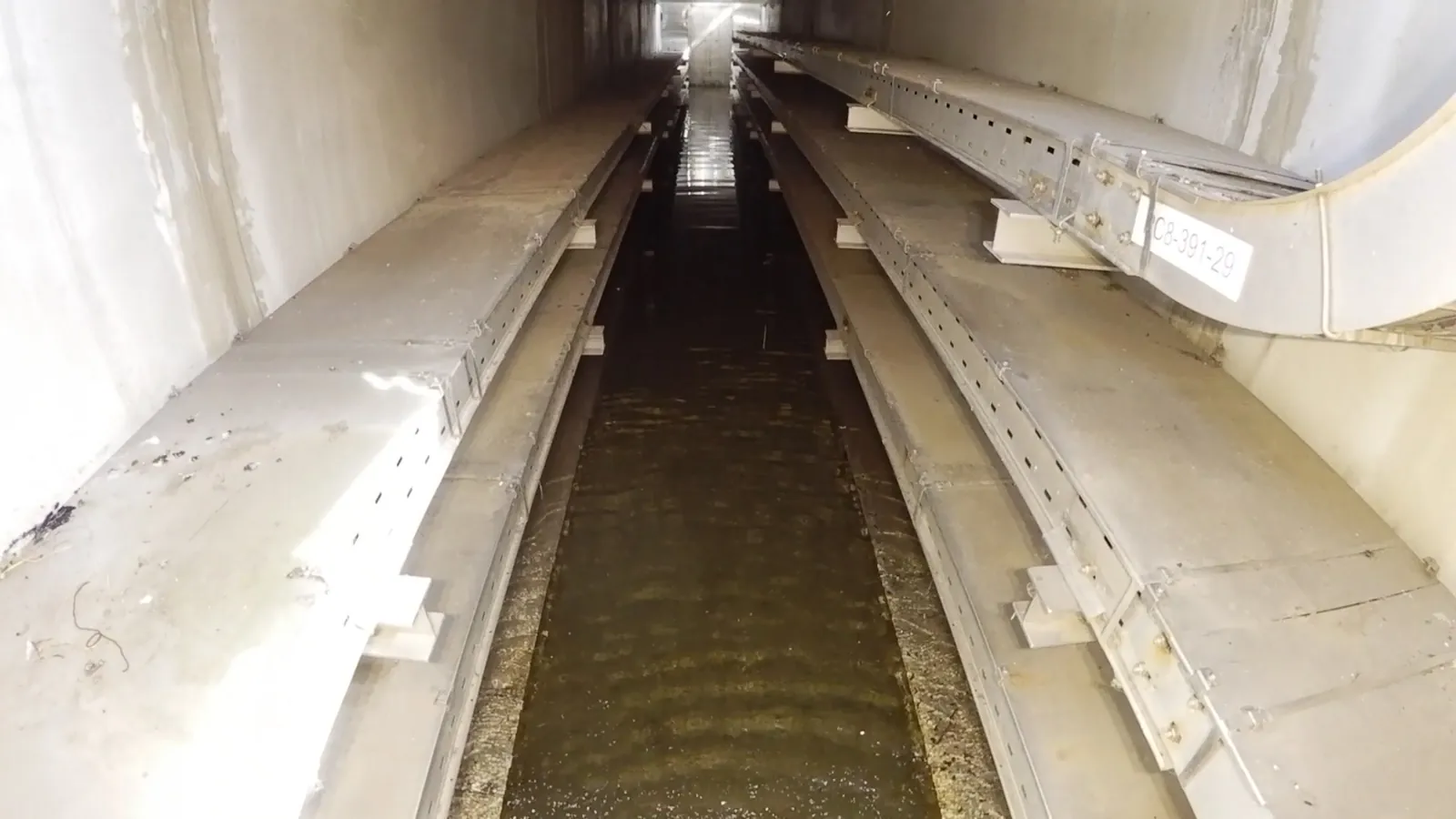
Anyone who walks through a cable duct or shaft is working in confined spaces: gas-free testing, ventilation, a standby attendant and a rescue plan are all part of it, and there is often water on the floor too. With the Flyability ELIOS 3 nobody has to go in. The caged drone takes off at the access shaft, flies down it and along the duct – between the cable trays and over standing water. With its own lighting it records walls, roof and trays and produces a 3D point cloud as it goes. Only the access the drone needs is opened.

Nobody has to enter the duct

No entry into the confined space, no gas-free testing for personnel: the drone flies, your staff stay at the entrance.
Section by section, without gaps

Walls, roof, floor and cable trays along the length flown – every photo with its position in the duct.

Inspection costs up to 80% lower

The effort for man entry, safety measures and rescue standby is not needed for the visual inspection. Your inspection costs can fall by up to 80%.

What plants look like inside – footage from our inspections

We fly ducts and shafts in power stations, chemical plants, and gas and energy supply:

  • Walk-through cable ducts and cable tunnels
  • Cable culverts under roads, railway tracks or watercourses
  • Service and utility ducts
  • Underground supply ducts below ground
  • Access and inspection shafts
  • Vertical shafts in structures and plants

The prerequisite is a cross-section in which the ELIOS 3 can fly with its protective cage. Narrow shafts, pipes and lines it does not fit into are not something we can fly – we will tell you this before the job.

The ELIOS 3 shows the visible condition of the structure and its fittings. Typical findings are:

  • Water ingress, standing water, signs of moisture and efflorescence
  • Cracks, spalling and exposed reinforcement on walls and roof
  • Corrosion on cable support systems, brackets, ladders and covers
  • Loose or sagging cable trays and supports
  • Deposits, growth and stored material
  • Damage to ladders, step irons and entrances

Every photo appears in the inspection report with its position in the 3D point cloud. In a duct where every section looks the same, this is how your maintenance team finds the spot again.

Only the entrance is opened

The drone takes off at the access shaft. Whether the duct stays in operation meanwhile is up to your operations team.

Several ducts in one visit

We fly ducts and shafts one after another; we bring enough batteries and recharge on site.

Every photo easy to locate again

The ELIOS 3 produces a 3D point cloud showing the flight path and the position of every photo.

Your contacts from permit to inspection report

  • Christian Engelke
  • Philipp von der Born
  • Dipl.-Wirt.-Ing. (FH) Juliana Engelke

  • Stefan Wolf

We plan inspections of cable ducts and shafts together with your maintenance and health and safety teams – since 2017, with our own pilots and the Flyability ELIOS 3.
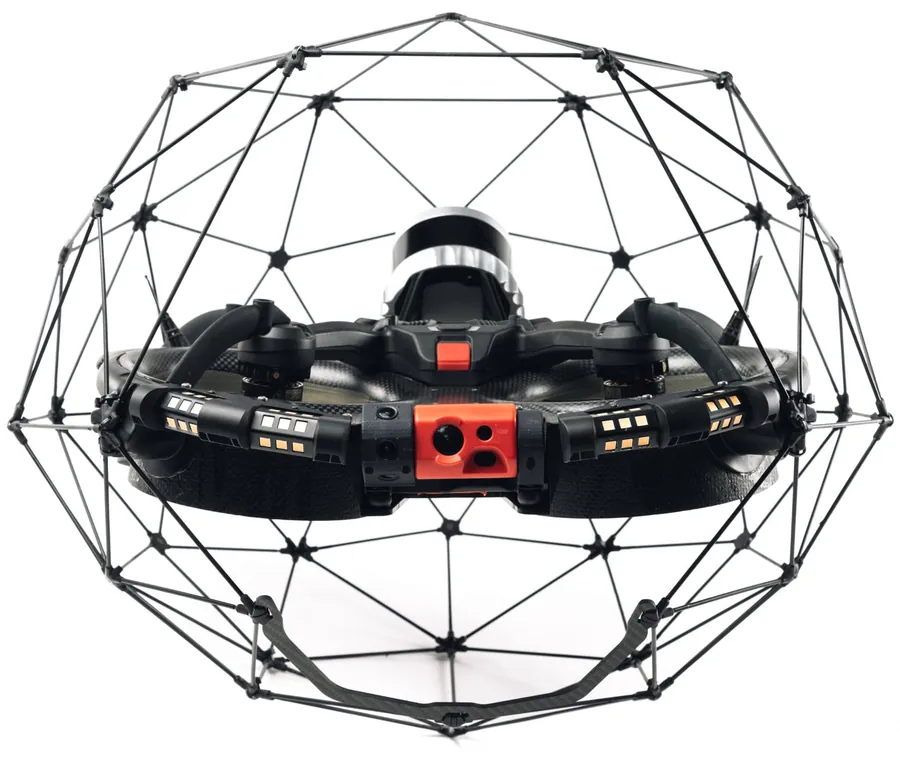
Flyability ELIOS 3 inspection drone

Every defect with a photo and its position – your expert assessor knows where to start

We fly – Inspectomatic, the reporting arm of our group of companies, analyses and produces your inspection report in the browser, with nothing to install: photos, videos, a 3D point cloud and located findings – per duct or per flight and, on request, compared with earlier inspections. The point cloud can be exported in common formats for CAD, BIM or your maintenance software. The 3D point cloud with all located findings is produced by Inspectomatic – more on this at inspectomatic.de/punktwolken (in German). You will find more background on the analysis of ducts and shafts and a project example from a cable duct on inspectomatic.de (in German).

We do not produce assessments or expert reports. These are prepared by your expert assessors or specialists you appoint, on the basis of the report.

Inspect ducts without anyone going in – write to us using the contact form.

The drone is better where access and overview are concerned:

  • It flies into ducts and shafts that are otherwise only accessible with an entry permit and safety measures.
  • Nobody has to enter the confined space.
  • It records the length flown without gaps instead of spot checks.
  • Every photo is located in the 3D point cloud.
  • The flight can be repeated: water ingress and corrosion can be compared over the years.

People are better where contact with the component and decisions are concerned:

  • Measurements on the structure: concrete cover, cores, crack widths
  • Electrical testing of cables and equipment
  • Assessment of findings, expert reports and decisions on repairs

The drone takes care of visual inspection and mapping; your expert assessor tests specifically at the points our report marks. Our article on non-destructive testing gives an overview of these methods.

  • Cross-section: the entrance and the duct must be large enough for the ELIOS 3 with its protective cage. Narrow shafts, pipes and lines are not something we can fly. Whether your duct is suitable we clarify in advance using drawings or photos.
  • Permit: the operator releases the duct for the flight. Gas-free testing for personnel is not needed; in hazardous (Ex) areas, the operator decides whether the drone may be used.
  • Length and route: below ground, the distance that can be flown depends on the route, branches and the radio link. We fly long ducts in sections from several entrances.
  • Visibility and water: dust, steam and mist limit visibility. The drone flies over standing water but cannot see below the surface.
  • Surface only: the drone sees the surface. Measurements on the structure and cables are handled by your inspector.

Inspect ducts and shafts without anyone going in – request an inspection

Tell us the asset and the occasion, and we will tell you which recordings and which report make sense.

Initial consultation: 30 minutes by video, pick a time directly.

  • We look forward to your enquiry and will get back to you promptly.

Or write to us

Which asset, what occasion, what time frame – a few lines are enough.

* Required. We do not pass your details on to third parties.

Frequently asked questions

How does the drone get into the duct?
Through an existing access shaft or an inspection opening. The pilot stands at the entrance and controls the drone using the live image and the 3D map. We agree with you in advance which access we use.
How long can a duct section be?
That depends on the route, bends, branches and the radio link below ground. Using your plans, we clarify in advance which sections we fly from which entrance.
Can the drone fly over standing water?
Yes. The drone flies over the water and records walls, roof and cable trays. It cannot see below the water surface; the footage documents the water level.
Do the cables have to be switched off for the flight?
That is the operator's decision. The drone does not touch any cables but flies between the trays. The conditions that apply to the flight are set by your site in the permit.
Do you offer camera inspection for narrow shafts?
No. For ducts and shafts we use the ELIOS 3 exclusively. Shafts, pipes and lines that it cannot fit into with its protective cage are not something we can fly. We clarify this before the job using your documents.
What applies in gas plants and in hazardous (Ex) areas?
In hazardous (Ex) areas, the operator decides whether the drone may be used. No gas-free testing is carried out for the drone; gas-free testing for personnel is not needed, because nobody enters the duct.
Do your own pilots fly, and do you offer training?
Inspection flights in ducts and shafts require experience – which is why our own pilots fly on our jobs. We do not offer pilot training. If you have your own ELIOS 3, we are happy to advise you on using it.